Despite the explosive growth of e-commerce, over 80% of retail transactions still happen in physical locations. But here’s what makes modern commerce interesting: 81% of shoppers research online before purchasing in-store, and the majority use both online and offline channels while making buying decisions.
This interplay between physical and digital creates the foundation for O2O (offline-to-online) marketing—strategies that bridge the gap between where customers encounter your brand in the physical world and the digital tools that drive engagement, capture data, and enable transactions.
For small businesses, O2O marketing levels the playing field. You don’t need a massive ad budget to connect with customers. You need smart systems that turn every physical touchpoint into a gateway to your digital presence. This guide shows you how.
Understanding the O2O Opportunity
The term “phygital”—physical plus digital—describes consumer behavior more accurately than treating online and offline as separate channels. Your customers don’t think of themselves as “online shoppers” or “in-store shoppers.” They’re just shoppers, using whatever channel is most convenient at any given moment.
This fluidity creates both challenges and opportunities. The challenge: customers expect seamless experiences regardless of channel. A disconnect between your physical presence and digital presence creates friction that drives customers to competitors. The opportunity: businesses that successfully bridge these worlds capture customer attention, data, and loyalty at every touchpoint.
Consider the customer journey for a local restaurant. Someone might see your sidewalk sign while walking by, scan a QR code to view your menu on their phone, browse reviews on Google, make a reservation through your website, receive a confirmation email, check in via a kiosk, pay through a mobile app, and receive a follow-up message asking for a review. Each transition between physical and digital is an O2O moment—and each one is an opportunity to strengthen the relationship or lose the customer.
QR Codes: The Core O2O Technology
QR codes have become the primary technology for bridging offline and online experiences. Their ubiquity—nearly everyone knows how to scan a QR code with their smartphone camera—eliminates the need for special apps or instructions.
Transforming Physical Touchpoints
Every physical element of your business can become a digital gateway with a QR code. Business cards link to digital profiles, scheduling tools, or portfolios. Packaging connects to product information, tutorials, or reorder options. Signage directs to menus, special offers, or event registration. Receipts enable feedback collection, loyalty program enrollment, or social media follows.
The key is intentionality. Rather than slapping a QR code on everything with a generic “scan for more info,” design each code with a specific purpose and a compelling reason for customers to scan.
Tracking and Attribution
Unlike traditional offline marketing, QR codes make physical touchpoints measurable. You can track how many people scanned, when they scanned, where they were located, and what device they used. This data transforms offline marketing from guesswork into an optimizable channel.
Use unique QR codes for different placements to understand which physical locations drive the most engagement. A code on your checkout counter might perform differently than one on your front window, which might differ from one on your delivery packaging. The data tells you where to invest.
Dynamic Flexibility
Dynamic QR codes—which redirect through a tracking URL rather than encoding the final destination directly—offer flexibility that’s essential for marketing. You can change where a code points without reprinting anything. Launch a spring promotion, then switch the same code to a summer campaign. Test different landing pages to see which converts better. Expire limited-time offers automatically.
First-Party Data Collection: The Strategic Imperative
With third-party cookies disappearing and privacy regulations tightening, first-party data—information you collect directly from customers with their consent—has become the most valuable marketing asset a business can build. O2O strategies excel at first-party data collection.
Value Exchange Mindset
Customers share their information when they receive clear value in return. Design your O2O touchpoints around fair exchanges: an email address for a discount code, a phone number for order updates, a full profile for a loyalty program enrollment. The more valuable your offering, the more information customers will willingly provide.
Physical interactions often create natural opportunities for these exchanges. Someone standing in your store is already interested in your products—they’re primed to sign up for your email list if you offer them something worthwhile in return.
Building Customer Profiles
Each O2O interaction adds to your understanding of individual customers. Someone who scanned a QR code at a farmers market, then visited your website, then attended your workshop, then made an online purchase has created a rich profile that helps you personalize future communications.
Connect your systems so that data captured in physical contexts flows into your digital marketing infrastructure. When someone scans a QR code and provides their email, that contact should automatically populate your email marketing platform with context about where and when they signed up.
Events: The Ultimate O2O Experience
Events represent perhaps the most powerful O2O opportunity because they combine the engagement of physical experience with the scalability of digital promotion and follow-up.
Digital Promotion, Physical Experience
Event marketing naturally spans channels. You promote online through email, social media, and paid advertising. Attendees register digitally, providing their contact information and preferences. The event itself happens in physical space, creating memories and relationships that digital interactions can’t match. Post-event, you follow up digitally with recordings, photos, resources, and invitations to future events.
Registration and Check-In
Digital registration systems capture attendee data before the event. QR code check-in on arrival verifies attendance and can trigger personalized experiences—a welcome message, a badge with their name, or access to exclusive content.
Platforms like Sprouter integrate registration, ticketing, check-in, and follow-up into a unified system that handles the entire event lifecycle while building your contact database.
Post-Event Nurturing
The data captured before and during events enables sophisticated follow-up. Segment attendees by which sessions they attended, which booths they visited, or what questions they asked. Send personalized content that extends the event experience and moves attendees toward your desired next action.
Local Search and Reviews: The Digital-Physical Connection
Local search optimization is inherently O2O—it’s about ensuring that when customers search online, they find and choose your physical location.
Google Business Profile Optimization
Your Google Business Profile is often the first thing local searchers see. Keep information accurate and complete: hours, address, phone number, website, photos, and attributes. Post updates regularly. Respond to questions and messages promptly.
Review Generation
Reviews dramatically influence local search visibility and customer decision-making. O2O touchpoints create natural opportunities to request reviews. A QR code on receipts or table tents links directly to your Google review page. A follow-up email after purchases asks for feedback. A text message after service appointments invites reviews.
Make the process frictionless. The fewer taps between seeing your request and completing a review, the more reviews you’ll collect.
In-Store Digital Experiences
Bringing digital elements into physical spaces creates the “phygital” experiences that modern customers expect.
Digital Displays and Signage
Digital screens can show real-time inventory, promotional videos, social media feeds, or dynamic pricing. Unlike static signage, digital displays can change throughout the day, respond to conditions, and stay perpetually fresh.
Interactive Product Information
QR codes or NFC tags on product shelves link to detailed specifications, how-to videos, comparison guides, and customer reviews. Customers get the research capabilities they’d have at home while standing in front of the actual product they’re considering.
Measuring O2O Success
The challenge of O2O measurement is connecting actions across channels to understand the full customer journey and accurately attribute results.
Cross-Channel Attribution
Simple last-click attribution fails for O2O because it ignores the physical touchpoints that influenced the journey. A customer who saw your sign, visited your website, received your email, and finally converted through a Google search wasn’t really acquired through search—they were acquired through the cumulative effect of multiple touchpoints.
Unique Identifiers
Use unique codes, URLs, and QR codes for different physical placements so you can trace online actions back to their offline origins. A customer who typed in a URL from your newspaper ad should arrive at a slightly different page than one who scanned a QR code from your packaging, enabling separate tracking.
Lifetime Value Perspective
O2O marketing often shines when viewed through a lifetime value lens rather than immediate conversion. The customer acquired through a physical interaction who later becomes a repeat online buyer contributes value that wouldn’t be captured by looking at either channel in isolation.
Implementation: Starting Your O2O Strategy
Building effective O2O capabilities doesn’t require massive investment. Start with these foundational steps.
Audit Current Touchpoints
List every physical touchpoint where customers interact with your business: locations, signage, packaging, receipts, business cards, vehicles, events, and more. For each one, ask: could this connect to a digital experience? What would make someone want to bridge from here to online?
Prioritize by Impact
You can’t optimize everything at once. Focus on touchpoints with the highest traffic or the strongest alignment with business goals. A high-traffic retail location might prioritize in-store QR codes. A service business might focus on business cards and client materials. An e-commerce brand might start with packaging inserts.
Create Dedicated Destinations
Generic website homepages waste the momentum created by physical interactions. Create dedicated landing pages for specific O2O touchpoints—a page for business card scans, another for packaging QR codes, another for event signage. Each page should deliver on the specific promise that prompted the scan.
Integrate Your Systems
Connect your O2O data capture to your broader marketing infrastructure. QR code scans should flow into your CRM. Event registrations should populate email lists. In-store signups should trigger automated welcome sequences. The more connected your systems, the more value you extract from each interaction.
The Future of O2O Marketing
Several trends will shape O2O marketing in the coming years. Augmented reality will blur physical-digital boundaries further, overlaying digital content onto physical environments through smartphone cameras. The Internet of Things will create more connected touchpoints as everyday objects gain digital capabilities. AI-powered personalization will customize digital experiences based on physical context—where someone is, what they’ve done, what they’re likely to want.
For small businesses, the implication is clear: building O2O capabilities now positions you for a future where physical and digital are inseparable. The skills you develop—connecting touchpoints, capturing first-party data, measuring cross-channel journeys—will only become more valuable as customer expectations continue evolving.
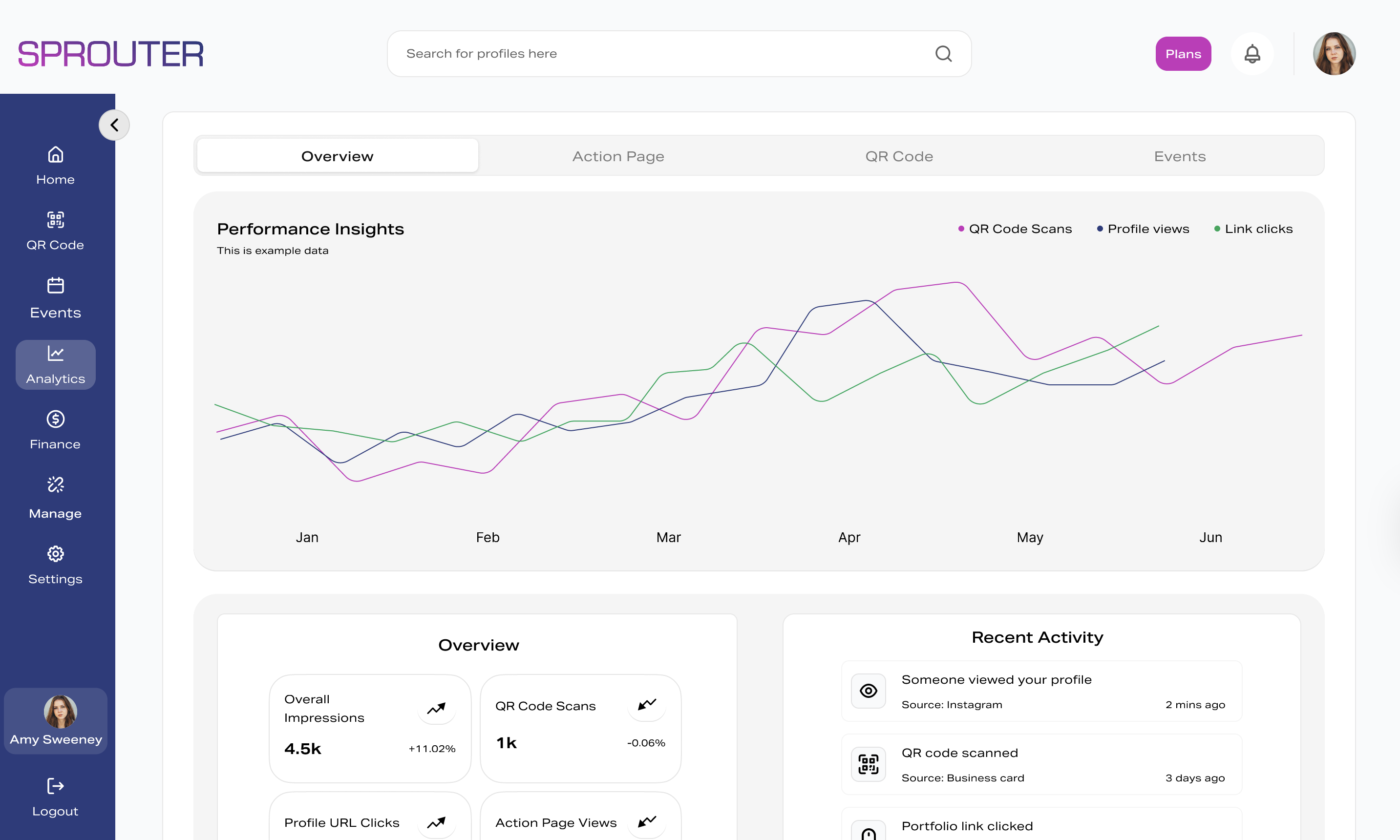
Ready to bridge your physical and digital presence? Sprouter combines Dynamic QR Codes, Action Pages, event ticketing, and partner-processed event checkout to create connected O2O experiences. See how our analytics connect touchpoints, and start connecting your offline presence to your online growth today.