

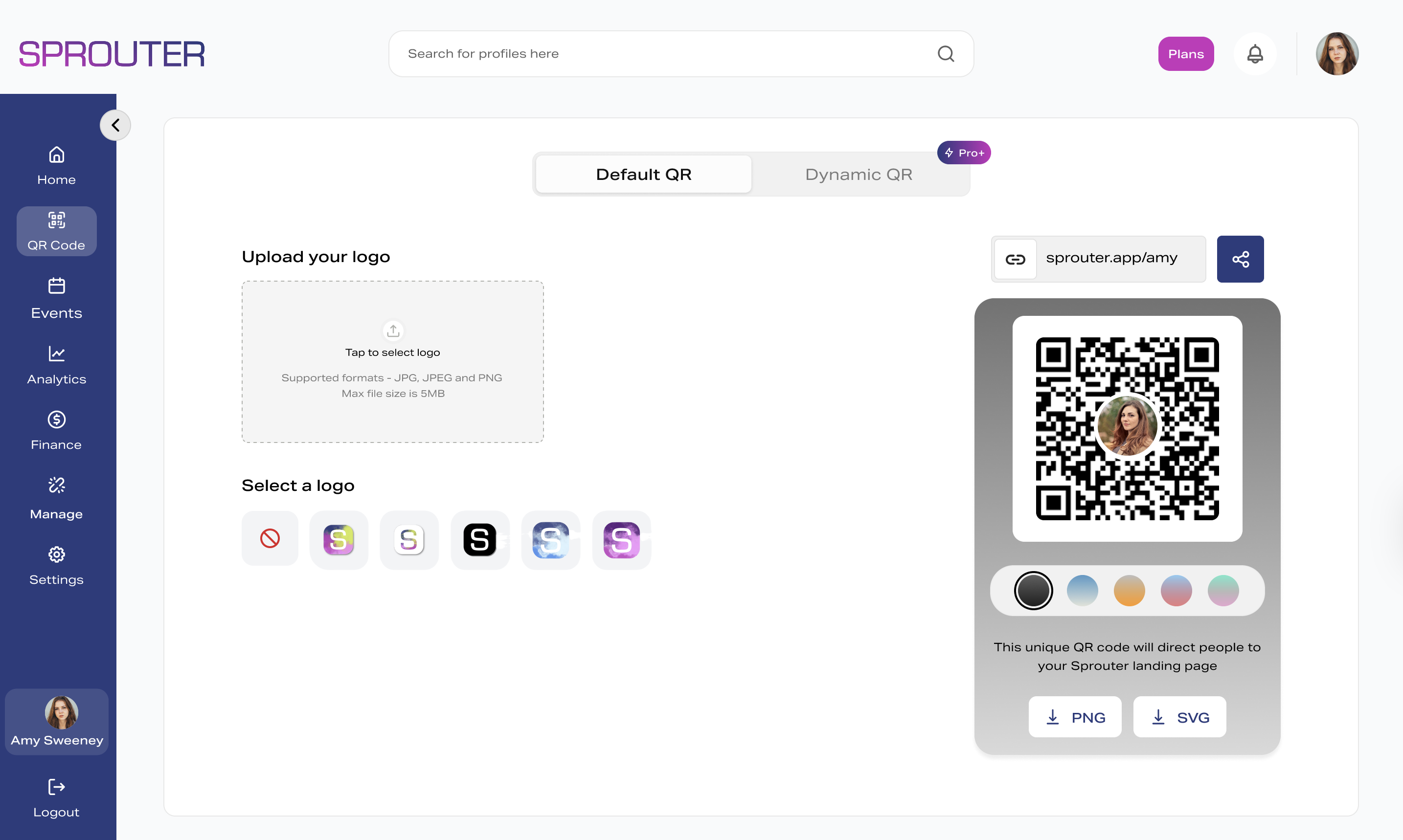
QR codes were supposed to be dead. For years, they were the punchline of marketing jokes—those little squares that nobody scanned, cluttering packaging and print ads without purpose.
Then everything changed. The pandemic normalized QR scanning for menus, payments, and health verification. Apple and Android added native camera scanning, eliminating the need for separate apps. And marketers discovered that QR codes, properly deployed, could do something digital advertising couldn’t: connect physical moments to digital engagement with perfect attribution.
In 2026, QR codes aren’t just alive—they’re the backbone of offline-to-online marketing strategy. But the codes driving results today bear little resemblance to the static squares of the past. They’re dynamic, trackable, intelligent triggers that turn any physical surface into a measurable marketing channel.
Static vs. Dynamic: The Critical Distinction
Most QR codes are static—they encode a fixed URL directly in the pattern. Once printed, the destination cannot change. If you need to update where the code points, you reprint everything.
Static codes provide no analytics. You know someone visited the destination URL, but you don’t know they came from that specific code. You can’t distinguish between the code on your business card and the code on your poster.
Dynamic QR codes work differently. They point to a redirect URL that routes scanners to your actual destination. This intermediate layer enables two transformative capabilities:
Editability. Change the destination anytime without reprinting. The code on ten thousand flyers can point to a new landing page with a single settings change. Run time-limited promotions, fix broken links, or pivot campaigns—all without touching physical materials.
Analytics. Every scan passes through the redirect, enabling complete tracking. Location, device type, time of scan, total scan count, unique versus repeat scanners—all captured automatically. You finally know which physical placements actually drive engagement.
This distinction matters enormously for marketing applications. Static codes are fine for permanent destinations that never change—your website homepage, a fixed contact page. Dynamic codes are essential for marketing, where measurement and optimization drive results.
What Modern QR Analytics Reveal
The analytics from dynamic QR codes transform physical marketing from guesswork to data-driven optimization.
Geographic data shows where people scan. A restaurant chain learns which locations drive the most QR engagement. A conference organizer sees which booth placements perform best. A retail brand discovers regional variations in campaign response.
Time patterns reveal when engagement happens. Morning commute scanners might want different content than evening browsers. Weekend behavior differs from weekday. Time data enables contextual experiences and informs placement strategy.
Device information indicates audience composition. iOS versus Android ratios, mobile versus tablet, browser types—all useful for optimizing landing experiences and understanding your audience.
Scan volume and unique counts measure reach and frequency. How many total scans? How many unique scanners? What’s the repeat rate? These metrics parallel digital advertising metrics but measure physical world behavior.
Conversion tracking connects scans to outcomes when integrated with landing page analytics. Which codes drive email signups? Which convert to ticket purchases? Which lead to follows? Attribution becomes possible across the physical-digital boundary.
This data enables optimization that was previously impossible. A/B test different placements. Compare performance across locations. Identify high-performing contexts and double down. Physical marketing becomes as measurable as digital.
Strategic QR Applications
QR codes excel when they add value at moments of physical engagement—when someone is already interacting with your brand in the real world and a digital connection would enhance the experience.
Product Packaging
Every product you ship or sell is a potential engagement trigger. QR codes on packaging can connect to:
- Setup instructions and tutorials
- Registration and warranty activation
- Exclusive content or offers
- Community spaces and support
- Replenishment and reorder pages
- Reviews and social proof requests
The value exchange is clear: the customer gets useful information, you get a direct connection that extends beyond the transaction.
Dynamic codes enable product-specific experiences without unique printing for each SKU. Route based on scan context, update destinations as campaigns change, and measure which products drive the most digital engagement.
Print Materials
Business cards, brochures, flyers, posters, and direct mail all become interactive with QR codes. Instead of hoping recipients remember your URL or manually type it later, provide instant access to:
- Contact information that saves directly to phones
- Calendars and scheduling tools
- Portfolios and work samples
- Event registration and ticketing
- Special offers and promotions
Track which materials drive engagement and which collect dust. Learn where distribution pays off and where it wastes resources.
Events and Venues
Events create dense concentrations of engaged audiences—perfect for QR engagement. Deploy codes throughout:
- Registration desks for quick check-in
- Session rooms for materials and feedback
- Sponsor booths for lead capture
- Networking areas for contact exchange
- Exit points for surveys and follow-up
Each code becomes a measurement point revealing attendee behavior and interest.
Retail Environments
Physical retail spaces offer constant QR opportunities:
- Product displays linking to reviews and details
- Fitting rooms connecting to virtual stylists
- Checkout areas promoting loyalty programs
- Window displays engaging after-hours browsers
- Receipt integration for feedback and retention
Brick-and-mortar becomes measurable digital marketing surface.
Out-of-Home Advertising
Billboards, transit ads, and public displays traditionally offered no tracking. QR codes change that—every scan is measurable, providing ROI data that out-of-home advertising historically lacked.
The constraint is scan friction. QR codes work in contexts where people have time and motivation to scan. A subway platform where people wait works better than a highway billboard they pass at 65 mph.
Designing for Scan Success
Not all QR implementations perform equally. Design choices significantly impact scan rates.
Size matters. Codes need to be large enough to scan from appropriate distances. A code on a poster viewed from six feet needs to be larger than one on a business card viewed from twelve inches. Too small and scanning becomes frustrating; too large wastes space.
Contrast is essential. The scanner needs to distinguish between light and dark modules. Black on white provides maximum contrast. Colored codes work but require careful contrast checking. Avoid low-contrast combinations that cause scanning failures.
Context and calls-to-action drive scans. A QR code without context is a meaningless square. Tell people what scanning gets them: “Scan for exclusive discount.” “Scan to join the community.” “Scan for setup guide.” The clearer the value proposition, the higher the scan rate.
Placement should match behavior. Position codes where people naturally pause and have phones accessible. Checkout lines, waiting areas, seated venues, product shelves—these work. Moving environments, distant viewing positions, and phone-unfriendly contexts don’t.
Error correction enables customization. QR codes include redundancy that allows partial damage without breaking functionality. This same feature enables design customization—logos, colors, and branded elements can overlay the code without preventing scans. Balance branding with reliability.
Testing prevents embarrassment. Always test printed codes with multiple devices before large-scale deployment. Printing issues, size problems, and design conflicts can render codes unscannable. A few test scans prevent thousands of dead codes.
Beyond Basic Codes: Advanced Applications
Sophisticated QR implementations go beyond simple scan-to-URL patterns.
Contextual routing sends scanners to different destinations based on conditions. A code might route to different pages based on:
- Time of day (breakfast menu vs. dinner menu)
- Location (localized content by region)
- Scan count (first 100 scanners get special offer)
- Device type (iOS vs. Android specific experiences)
- Previous behavior (returning scanner recognition)
Same printed code, dynamically appropriate destination.
Multi-action codes connect to landing experiences offering choices rather than single destinations. Scan once, see options: book appointment, view menu, join email list, follow on social. The scanner chooses their preferred action.
Authentication and access control use QR codes as tickets or credentials. Concert admission, event check-in, loyalty verification, exclusive access—the code becomes proof of entitlement rather than just a link.
Payment integration connects codes directly to transaction flows. Scan to pay, scan to tip, scan to donate—reducing friction between physical interaction and financial conversion.
Offline functionality encodes information directly for contexts without reliable connectivity. Contact information, WiFi credentials, or plain text can be encoded for scenarios where internet access is uncertain.
The Landing Experience Imperative
A QR code is only as good as what it connects to. The most sophisticated code fails if it links to a poor landing experience.
Mobile optimization is non-negotiable. 100% of QR scans come from mobile devices. Landing pages must be fully mobile-optimized—fast loading, thumb-friendly navigation, readable without zooming, functional across devices.
Speed critically impacts completion. Every second of load time increases abandonment. Optimize images, minimize scripts, use fast hosting. The person who just scanned expects instant response.
Context continuity matters. The landing experience should acknowledge the scan context. Someone scanning a product code expects product information. Someone scanning at an event expects event-relevant content. Generic pages feel disconnected.
Clear action paths drive conversion. Every landing experience should have an obvious primary action. Don’t overwhelm scanners with options—guide them toward the conversion that matters most for that context.
Capture mechanisms earn the scan. The value exchange should be clear and immediate. If you’re asking for an email, provide something worth the exchange. If you’re asking for a follow, demonstrate why they should.
Platforms like Sprouter provide Action Pages designed specifically for post-scan engagement—mobile-optimized, fast-loading, conversion-focused landing experiences that match QR best practices by default.
Measuring QR Program Success
Effective QR programs establish clear metrics and track them consistently.
Scan rate measures the percentage of code exposures that result in scans. If your codes appear on 10,000 products and generate 500 scans, that’s a 5% scan rate. Compare rates across placements, designs, and contexts to optimize.
Unique reach counts distinct individuals rather than total scans. High total scans with low unique reach indicates repeat scanning (possibly good for loyalty, possibly indicating friction). Balance total engagement against reach objectives.
Conversion rate tracks post-scan actions: email captures, ticket purchases, follows, downloads. This is the ultimate measure—not just scans but valuable outcomes. Optimize the full funnel from scan through conversion.
Attribution accuracy connects QR engagement to downstream behavior. Did scanners become customers? Did they attend events? Did they make purchases? Connecting QR data to CRM and transaction data reveals true ROI.
Placement performance compares results across different physical locations and contexts. Which placements drive volume? Which drive conversion? This data informs future distribution strategy.
Integration with Broader O2O Strategy
QR codes are triggers, not complete solutions. They work best as components of integrated offline-to-online systems.
The most effective implementations connect QR engagement to:
- CRM systems that track scanner profiles over time
- Event platforms that use codes for ticketing and check-in
- Commerce systems that process post-scan purchases
- Community platforms that convert scanners to members
- Analytics systems that connect scans to customer journeys
Sprouter exemplifies this integration—QR codes connect to Action Pages, which connect to events, which connect to payments, which connect to profiles, which connect to analytics. The QR scan is the entry point to a complete O2O system, not a standalone tool.
The Physical-Digital Future
QR codes represent something larger: the merging of physical and digital experience.
Every physical surface becomes a potential digital entry point. Every real-world interaction becomes trackable and optimizable. The boundary between offline and online blurs as connection technologies become seamless and ubiquitous.
The brands winning in 2026 aren’t those avoiding this integration—they’re those mastering it. They’re turning products, locations, events, and materials into measurable marketing channels. They’re capturing first-party data at physical touchpoints. They’re building relationships that start with a scan and compound over time.
QR codes aren’t the future of marketing. They’re the bridge to a future where physical and digital are inseparable—where every real-world moment can become a digital relationship, measured, optimized, and valued.
The question isn’t whether to use QR codes. It’s whether you’re using them intelligently, dynamically, and as part of an integrated system that captures their full potential.
Ready to deploy intelligent QR campaigns? Sprouter provides dynamic QR codes with full analytics, connected to Action Pages built for mobile conversion. Start bridging physical and digital today.