

By the end of 2027, the barcode as we’ve known it for fifty years will fundamentally change.
The GS1 Sunrise 2027 initiative is transitioning the global supply chain from traditional one-dimensional UPC/EAN barcodes to two-dimensional QR codes. This isn’t a minor technical upgrade—it’s the largest coordinated change to product identification in half a century.
Testing is already underway in 48 countries representing 88% of the world’s GDP. Major retailers including Walmart and Dillard’s are requiring 2D barcode compliance. By the end of 2027, every point-of-sale system needs to read QR codes alongside traditional barcodes.
Most brands are treating this as a compliance exercise: update the packaging, ensure the codes scan at checkout, move on. They’re focused entirely on the supply chain requirement and ignoring something far more valuable.
The same QR codes required for checkout can connect every product to rich digital experiences for consumers. The same code scanned by a POS terminal can be scanned by any smartphone to deliver brand content, engagement opportunities, and direct relationships.
This is the opportunity most brands are missing. GS1 Sunrise 2027 isn’t just a supply chain mandate—it’s the largest consumer engagement opportunity in retail history. And the brands that recognize this distinction will build advantages their competitors cannot replicate.
Understanding the Shift
For fifty years, the UPC barcode has done one thing: encode a product identifier that maps to a price in a retail system. The barcode contains a GTIN (Global Trade Item Number), the scanner looks up that number, and checkout proceeds.
This system works beautifully for its intended purpose. But it was designed in an era before smartphones, before mobile internet, before consumers expected instant access to information. The traditional barcode has no capacity for anything beyond product identification.
2D barcodes—specifically QR codes and Data Matrix codes—can carry dramatically more information. A QR code can contain URLs, batch numbers, serial numbers, expiration dates, manufacturing data, and links to online resources. More importantly, any smartphone can scan these codes without special apps.
GS1 Digital Link is the standard that enables this expanded functionality. It structures QR codes as web-enabled identifiers that connect products to online information sources. The same code that tells a POS terminal “this is product X” can tell a consumer’s smartphone “here’s everything you want to know about product X.”
This dual functionality is the revolution most brands are underestimating.
The Consumer Engagement Gap
Research shows 79% of consumers are more likely to purchase products with a scannable barcode or QR code that provides additional product information. Consumers want access to ingredients, sourcing data, usage instructions, sustainability credentials, and authenticity verification.
GS1 Sunrise 2027 will put the technical capability for this engagement on every product. But capability isn’t the same as execution. A QR code that scans correctly at checkout but leads nowhere useful for consumers wastes the opportunity entirely.
The gap is infrastructure. Most brands have no system for delivering consumer-facing experiences from product QR codes. They have:
- No landing pages optimized for smartphone scanning
- No content strategy for post-scan engagement
- No analytics tracking consumer scan behavior
- No conversion mechanisms for capturing relationships
- No commerce integration for scan-triggered transactions
- No ongoing connection infrastructure beyond the single scan
They’ll comply with GS1 Sunrise by putting functional QR codes on packaging. But those codes will lead to generic websites, broken links, or worse—nothing at all.
The brands that treat this as opportunity rather than compliance will build something different: complete consumer engagement infrastructure that turns every product scan into relationship value.
What Consumer Engagement Infrastructure Requires
Turning product QR codes into engagement engines requires integrated infrastructure across several layers.
Landing Experiences
When a consumer scans a product QR code, they need a destination worth visiting. Not a generic corporate website. Not a slow-loading page designed for desktop browsers. A mobile-optimized landing experience specifically designed for the scan context.
These landing experiences should be:
- Fast-loading (consumers abandon slow pages instantly)
- Mobile-native (100% of scans come from smartphones)
- Contextually relevant (product-specific, not generic)
- Action-oriented (clear calls to action, not just information)
- Trackable (capturing engagement data for optimization)
The experience might vary by product, by time, by location, or by consumer segment. Dynamic landing pages that adapt to context dramatically outperform static destinations.
Conversion Mechanisms
Information alone doesn’t build relationships. Landing experiences need conversion pathways—ways to capture ongoing connection with the consumer who scanned.
This might include:
- Email or SMS signup for product updates
- Loyalty program enrollment
- Social media follows
- Community membership
- Content unlocks (recipes, tutorials, guides)
- Exclusive offers or promotions
- Event registration
- Purchase facilitation
The specific conversion depends on brand strategy and product context. The requirement is having conversion mechanisms at all—ways to transform one-time scanners into known contacts with ongoing engagement potential.
Analytics and Attribution
Understanding scan behavior enables optimization. When are consumers scanning? Where? What do they do after landing? Which products generate the most engagement? Which landing experiences convert best?
This data informs product strategy, marketing decisions, and packaging design. Without analytics, brands fly blind—deploying QR codes everywhere but understanding nothing about their impact.
Analytics should connect scans to downstream behavior: which scanners become email subscribers, which subscribers become purchasers, which purchasers become repeat customers. This attribution chain reveals true QR code ROI.
Commerce Integration
Some product scans should lead to commerce. Reordering, subscription enrollment, related product purchase, event tickets, service booking—the transaction possibilities vary by brand and product.
Commerce integration means payment processing, order management, and fulfillment connectivity. Without this integration, commerce-oriented scans hit dead ends or require consumers to start over on separate platforms.
Relationship Management
A single scan should begin a relationship, not end an interaction. Consumer profiles should accumulate engagement across scans—tracking which products they’ve engaged with, what content they’ve accessed, what conversions they’ve completed.
This profile data enables personalization: subsequent scans can deliver experiences informed by previous behavior. First-time scanners get different content than repeat engagers. High-value customers receive different treatment than new contacts.
Why Unified Platforms Win
Most brands attempting consumer engagement from product QR codes will assemble fragmented tool stacks: QR generator here, landing page builder there, analytics somewhere else, email capture in another system, commerce on yet another platform.
This fragmentation creates the same problems it creates everywhere in marketing technology:
- Data lives in silos, preventing unified customer view
- Attribution breaks at every handoff between systems
- Operational complexity increases with each added tool
- Integration maintenance consumes ongoing resources
- Customer experience suffers from disjointed interactions
For GS1 Sunrise specifically, fragmentation creates additional problems. The 2027 deadline creates time pressure for implementation. Complex multi-tool architectures take longer to deploy and longer to optimize. Brands juggling multiple vendors while trying to meet compliance deadlines will struggle to capture engagement opportunity alongside supply chain requirements.
Unified platforms that handle the complete engagement journey—from QR scan through landing experience through conversion through ongoing relationship—simplify implementation and enable faster optimization. When analytics connect directly to landing pages connect directly to conversion mechanisms connect directly to customer profiles, the entire system improves together.
The Sprouter Advantage for GS1 Sunrise
Sprouter is designed specifically for the scan-to-settlement journey that GS1 Sunrise enables.
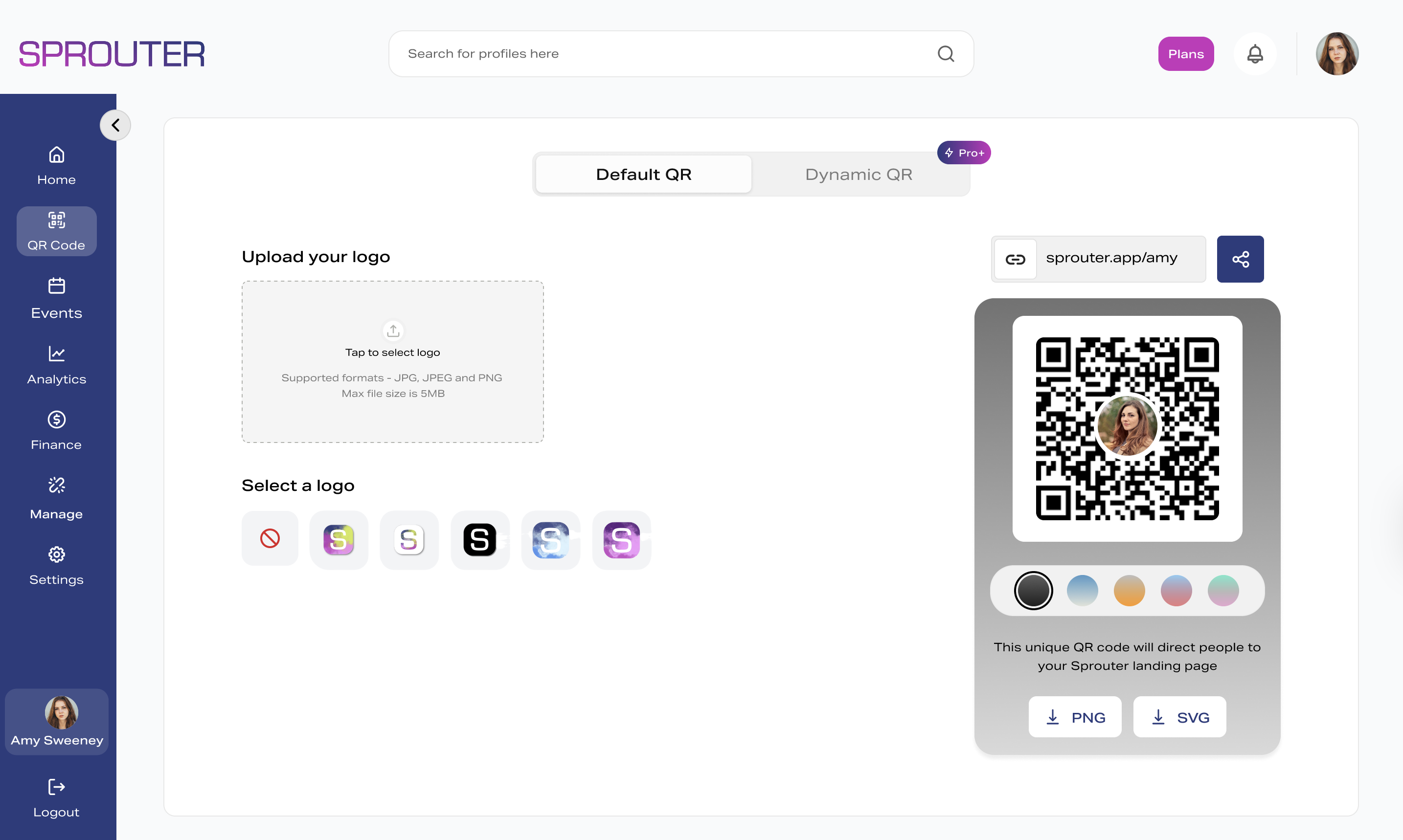
Dynamic QR Codes: Update destinations without reprinting codes—critical during the GS1 transition when packaging iterations are common. Track every scan with location, device, time, and source data. Route scans contextually based on conditions you define.
Action Pages: Mobile-native landing experiences built for post-scan engagement. They’re not generic landing page templates—they’re conversion surfaces designed specifically for the smartphone context.
Conversion and Commerce: Action Pages integrate directly with conversion mechanisms. Email capture, social follows, event registration, and ticket sales all happen within the same experience, tracked within the same system.
Event Payments: For event-ticket use cases, Sprouter connects buyer checkout, transaction records, post-event payout review, and organizer ACH payout status. A payment processing partner processes payments and controls proceeds during the event hold; eligible proceeds are paid to the linked organizer bank account.
Unified Analytics: All these layers connect through unified analytics. Which products drive the most scans? Which landing experiences convert best? The complete journey is visible in one system.
The Timeline Imperative
GS1 Sunrise 2027 isn’t a distant deadline—it’s roughly 18 months away. Brands need to:
- Update packaging with compliant 2D barcodes
- Ensure POS systems can process the new codes
- Build consumer engagement infrastructure
- Test and optimize before full rollout
Most brands are focused on steps one and two—the supply chain requirements. They’ll accomplish compliance. But steps three and four—the engagement opportunity—take time to build properly.
Brands that begin building consumer engagement infrastructure now will have time to test, learn, and optimize before the industry-wide transition completes. They’ll understand what content resonates, what conversions work, what landing experiences perform. They’ll have data-informed strategies while competitors scramble to build basic capability.
The competitive window is narrow. Once GS1 Sunrise completes, every product will have scannable QR codes. The brands that built engagement infrastructure early will have compounding advantages—refined experiences, accumulated customer relationships, optimized conversion funnels—while late movers start from zero.
The Bigger Picture
GS1 Sunrise 2027 represents something larger than a barcode format change. It’s the physical-digital convergence that technology has promised for decades, finally becoming universal.
Every product becomes a digital entry point. Every package scan becomes a relationship opportunity. Every physical purchase creates digital engagement potential.
The brands that grasp this—that see GS1 Sunrise as engagement opportunity rather than compliance burden—will build the customer relationships that define the next era of commerce. Those treating it as a technical checkbox will comply with the standard while missing everything it enables.
The biggest QR code deployment in history is coming. The question isn’t whether your products will have QR codes—they will, by requirement. The question is what those codes will do when consumers scan them.
Will they lead somewhere valuable? Will they capture relationships? Will they drive engagement, conversion, and loyalty?
Or will they just work at checkout?
Ready to turn GS1 Sunrise into engagement opportunity? Sprouter provides the complete infrastructure—dynamic QR codes, Action Pages, conversion mechanisms, commerce integration, and unified analytics. Assess your compliance readiness and build your consumer engagement layer before 2027.