The way businesses track and understand customers is changing fundamentally. Third-party cookies—the technology that powered much of digital advertising for two decades—are disappearing. Privacy regulations are tightening globally. Consumers are more protective of their data than ever.
For small businesses, this shift creates both challenge and opportunity. Those who adapt by building first-party data strategies will gain competitive advantages. Those who don’t will find marketing increasingly expensive and less effective.
Understanding first-party data isn’t optional anymore. It’s essential.
What Is First-Party Data?
First-party data is information you collect directly from your customers and audience through your own channels. Unlike third-party data (gathered by external companies tracking users across the web), first-party data comes from your direct relationships.
Examples of First-Party Data
- Email addresses collected through signup forms
- Purchase history from your own transactions
- Website behavior on your own site
- Survey responses and feedback
- Event attendance and engagement
- Customer service interactions
- Social media engagement on your profiles
- App usage data from your own applications
The defining characteristic: you collected it directly, with the customer’s knowledge, through interactions with your business.
First-Party vs. Third-Party Data
Third-Party Data Collected by external companies tracking users across multiple websites and apps. Purchased or licensed for advertising targeting. Users often don’t know it’s being collected.
First-Party Data Collected directly by your business from your customers. Gathered through direct interactions. Users typically understand the exchange (giving email for a discount, making a purchase, etc.).
Zero-Party Data A subset of first-party data that customers intentionally and proactively share—like preferences, interests, or survey responses. The most valuable because it’s explicitly volunteered.
Why First-Party Data Matters Now
The Third-Party Cookie Collapse
Third-party cookies enabled tracking users across the web, building detailed profiles that powered targeted advertising. This system is crumbling:
- Safari and Firefox block third-party cookies by default
- Chrome (66% of browser market) is phasing out third-party tracking
- Privacy regulations require explicit consent
- Ad blockers are increasingly common
For small businesses relying on Facebook ads or Google remarketing, this means:
- Smaller retargeting audiences
- Less precise targeting options
- Higher customer acquisition costs
- Reduced attribution clarity
The Privacy Regulation Wave
GDPR (Europe), CCPA (California), and dozens of other privacy laws have transformed data collection requirements:
- Explicit consent required before collecting data
- Clear disclosure of how data will be used
- Right to deletion upon request
- Penalties for non-compliance
These regulations favor first-party data collection (with proper consent) over third-party tracking.
Consumer Expectations
Modern consumers understand data collection better than ever—and they’re selective about sharing:
- 75% of consumers express concern about data privacy
- 82% have encountered fake reviews, eroding trust in external signals
- Younger generations especially value transparency
The businesses that earn trust through transparent first-party relationships will outperform those depending on opaque third-party tracking.
The Small Business Advantage
Large enterprises have teams dedicated to data infrastructure. Small businesses can’t match that investment—but they have advantages:
Direct Customer Relationships
Small businesses often have closer customer relationships than large corporations. These relationships create natural opportunities for first-party data collection that feel authentic rather than extractive.
Agility
Implementing first-party data strategies doesn’t require enterprise software or massive teams. Small businesses can move quickly, testing approaches and optimizing as they learn.
Trust
Local businesses, creators, and small brands often enjoy higher trust than faceless corporations. This trust translates into willingness to share data—when the value exchange is clear.
Building Your First-Party Data Strategy
Step 1: Audit What You Already Have
Most businesses collect first-party data without calling it that. Inventory your existing sources:
- Customer email lists
- Purchase records and transaction history
- Website analytics (your own site)
- Social media followers and engagement
- Event attendee lists
- Survey responses
- Customer service records
You likely have more first-party data than you realize. The question is whether you’re using it effectively.
Step 2: Identify Collection Opportunities
Where can you capture more first-party data through natural customer interactions?
Online Touchpoints
- Email signup forms (with valuable offers)
- Account creation during checkout
- QR codes on physical materials
- Action Pages with subscriber capture
- Content downloads requiring email
Offline Touchpoints
- In-store sign-up incentives
- Event registration and check-in
- Loyalty programs
- Business card exchanges
- Survey cards and feedback requests
Transactions
- Purchase information
- Booking and reservation data
- Service appointment details
Step 3: Create Value Exchanges
People share data when they receive value in return. Design clear exchanges:
| You Offer | Customer Provides |
|---|---|
| 15% discount | Email address |
| Exclusive content | Email + preferences |
| Early access | Email + interests |
| Free guide/template | Email + role |
| Event admission | Contact info + attendance |
The more specific the value, the more likely people will share information.
Step 4: Centralize and Organize
Scattered data across multiple systems limits usefulness. Centralize where practical:
- Use CRM software to consolidate customer information
- Connect email marketing with purchase data
- Link event attendance to customer profiles
- Integrate feedback with customer records
Even simple spreadsheet-based organization beats data scattered across disconnected tools.
Step 5: Use Data Responsibly
First-party data advantages only persist if you maintain trust:
- Only collect what you’ll actually use
- Store data securely
- Honor opt-out requests promptly
- Be transparent about data usage
- Delete data when requested
Violating trust destroys the first-party relationship that makes data valuable.
Practical Applications for Small Businesses
Email Marketing Segmentation
First-party data enables targeted email campaigns:
- Purchase history → product recommendations
- Event attendance → related event invitations
- Content engagement → topic-focused newsletters
- Customer lifecycle → appropriate messaging timing
Personalized Customer Experiences
Understanding individual customers allows personalization:
- Previous purchases inform upsell suggestions
- Preferences guide service customization
- Behavior patterns predict needs
Event and Experience Design
For businesses using events:
- Understand attendee preferences
- Track engagement across events
- Personalize event experiences
- Measure actual attendance vs. registration
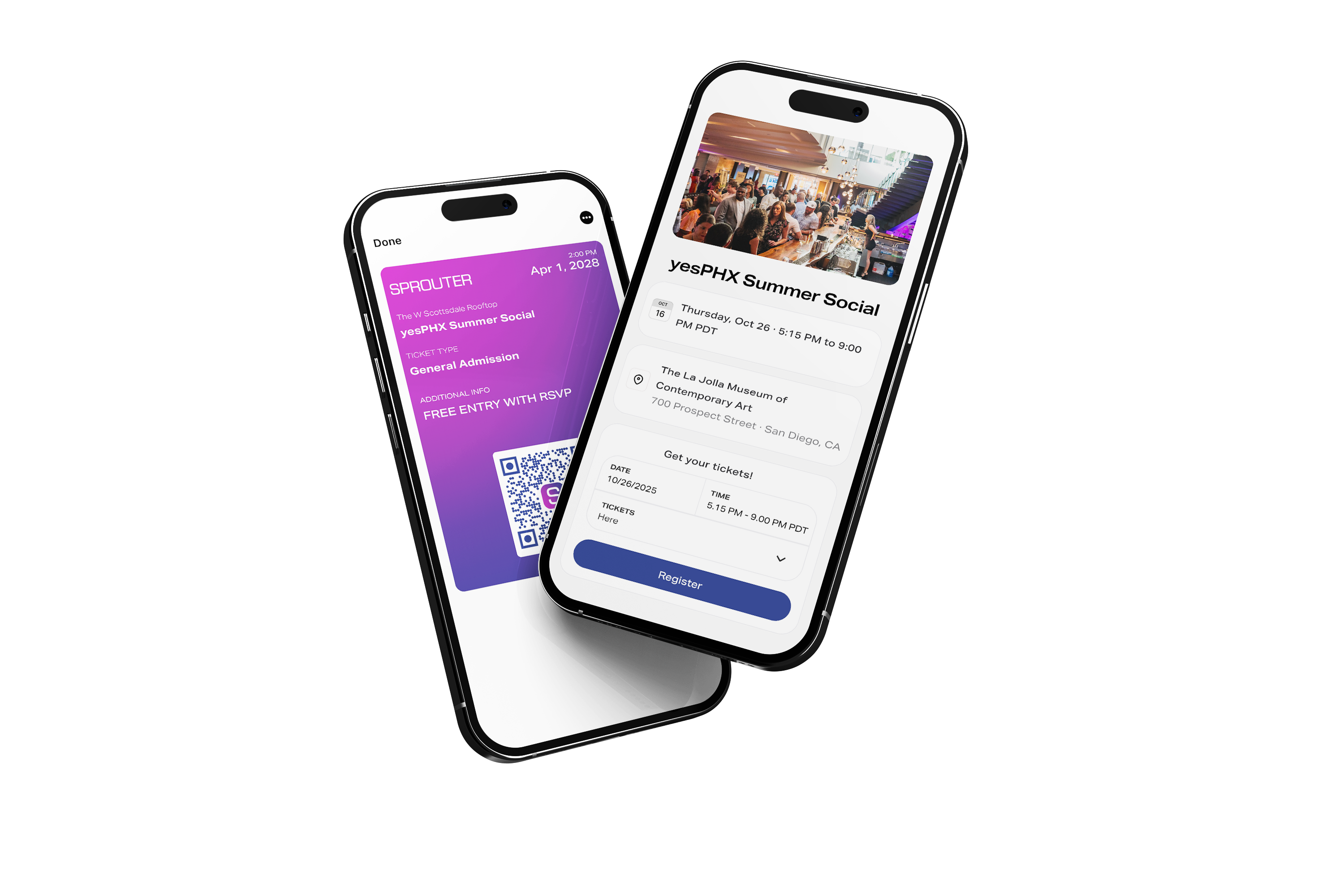
Sprouter’s event ticketing captures first-party data at every step—registration, ticket purchase, and check-in—creating rich attendee profiles for future marketing.
Tools for First-Party Data Collection
Email Marketing Platforms
ConvertKit, Mailchimp, MailerLite, and similar platforms capture email addresses and engagement data. Most include landing pages and forms for website-free collection.
CRM Systems
HubSpot, Zoho, and simpler tools like Notion or Airtable can centralize customer information for small businesses.
Action Pages and Link-in-Bio Tools
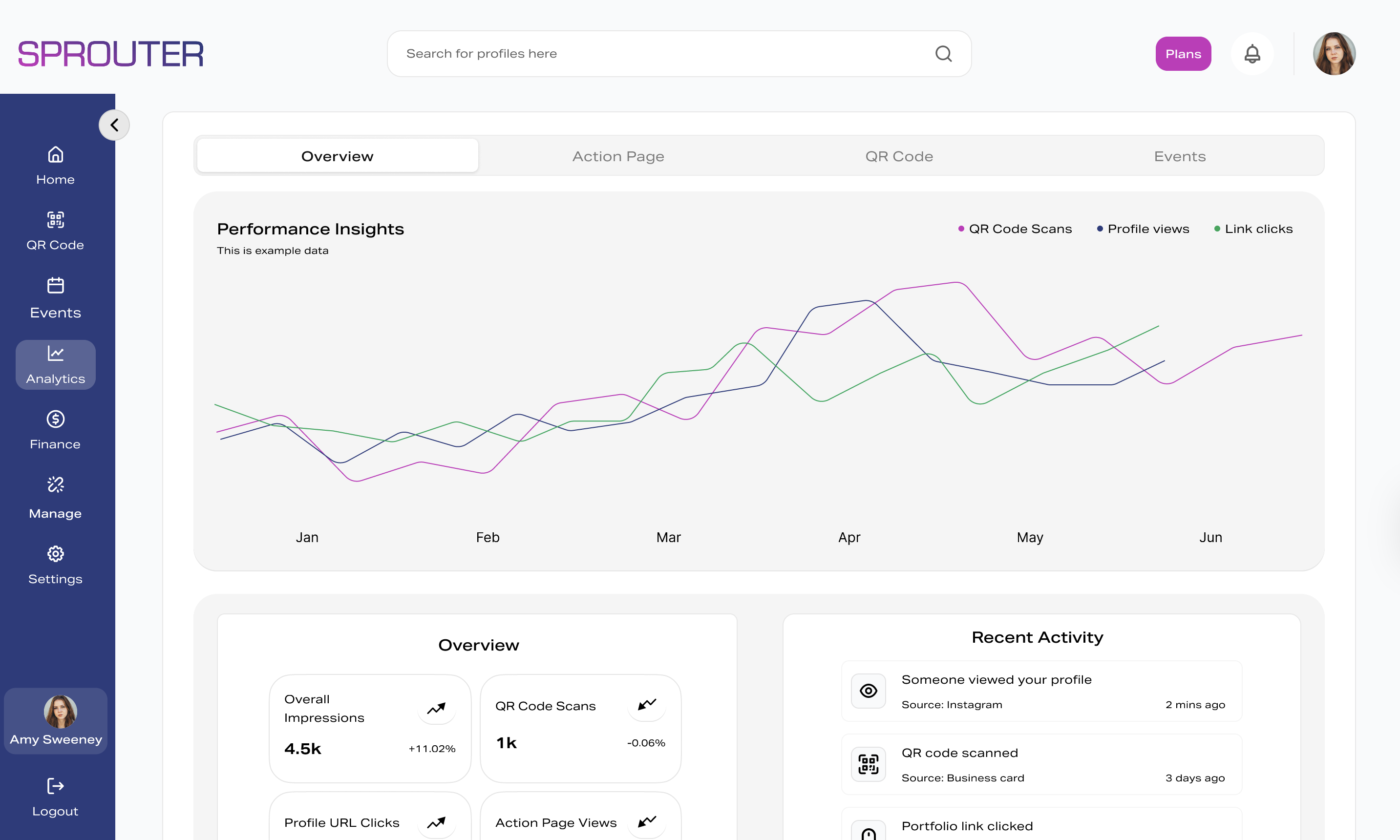
Sprouter’s Action Pages serve as first-party data collection hubs—capturing visitor engagement, email signups, and QR scan analytics in one place.
QR Code Platforms
Dynamic QR codes with analytics capture engagement data from offline touchpoints. Each scan provides timestamp, location, and device information.
Event Platforms
Event ticketing and management tools capture rich attendee data including contact information, purchase behavior, and attendance patterns.
The Competitive Advantage
The businesses investing in first-party data strategies now will have significant advantages by 2027 and beyond:
- Years of customer data and learning
- Refined collection and activation tactics
- Established trust through transparent practices
- Lower acquisition costs than competitors
Meanwhile, businesses still dependent on third-party data will face:
- Rising ad costs as targeting degrades
- Shrinking retargeting audiences
- Compliance risk as regulations tighten
- Scrambling to catch up while competitors pull ahead
The transition to first-party data isn’t just about replacing deprecated tracking methods. It’s about building sustainable customer relationships that generate long-term value.
Getting Started This Week
Don’t let perfect be the enemy of good. Start simple:
- Audit existing data: What first-party data do you already have?
- Add one collection point: An email signup form, QR code, or event registration
- Create one value exchange: What can you offer for email signup?
- Track and optimize: Measure what works and improve
Sprouter provides several first-party data tools in one platform—Action Pages with subscriber capture, QR codes with scan analytics, and event ticketing with attendee data. For small businesses starting their first-party data journey, integrated tools simplify implementation.
The era of easy third-party data is ending. The era of first-party relationships is beginning. The businesses that recognize this shift and act accordingly will thrive. The rest will struggle to understand why marketing that used to work no longer does.
Ready to build your first-party data strategy? Start with Sprouter and create Action Pages, QR codes, and event experiences that capture the customer data you actually own.