The package in your hand is about to become something it has never been: a direct communication channel between you and the brand that made it.
For the entire history of consumer goods, packaging served two functions: protect the product and persuade the purchase. Once you bought something and left the store, the package became functionally inert—useful information printed on it, perhaps, but no ongoing connection to the brand.
GS1 Sunrise 2027 changes this fundamental dynamic. As QR codes replace traditional barcodes on every product, every package becomes capable of connecting consumers directly to brand experiences, information, services, and relationships.
This isn’t theoretical future technology. Connected packaging pilots are underway in 48 countries. Major retailers are requiring 2D barcode compliance. By the end of 2027, the infrastructure will be universal.
The brands preparing now—building consumer engagement capability for their packaging—will own direct customer relationships at unprecedented scale. Those treating GS1 Sunrise purely as supply chain compliance will put QR codes on packages that lead nowhere valuable.
Connected packaging is the next frontier of customer relationship. The opportunity is enormous. The preparation window is narrowing.
What Connected Packaging Actually Means
Connected packaging embeds digital triggers—primarily QR codes under GS1 Sunrise—that link physical products to online experiences. When consumers scan these codes with smartphones, they access brand-controlled content, services, and interactions.
The connection possibilities are extensive:
Product Information
- Detailed ingredients and materials
- Sourcing and supply chain transparency
- Manufacturing and freshness data
- Nutritional analysis and dietary information
- Allergen warnings and safety data
- Authenticity verification
Usage Guidance
- Instructions and tutorials
- Recipe suggestions for food products
- Styling tips for apparel
- Assembly guides for complex products
- Maintenance and care information
- Troubleshooting and support
Brand Experience
- Brand story and values
- Behind-the-scenes content
- Sustainability commitments and proof
- Community and social connection
- Entertainment and engagement
Commerce Extension
- Repurchase and subscription enrollment
- Related product discovery
- Exclusive offers and promotions
- Loyalty program integration
- Service booking and scheduling
Regulatory Compliance
- Digital Product Passport (EU requirement)
- Recycling and disposal guidance
- Safety documentation
- Certification and testing data
The specific mix depends on product category, brand strategy, and consumer expectations. But the capability—direct brand-to-consumer connection from every package—becomes universal.
The Direct Relationship Revolution
Connected packaging creates something most consumer goods brands have never had: direct customer relationships unmediated by retailers or platforms.
Consider the traditional model. A consumer sees advertising, walks into a store, chooses a product from a shelf, and pays a retailer. The brand has no idea who bought the product, why they chose it, whether they liked it, or if they’ll buy again. Customer data belongs to the retailer. Consumer feedback arrives through expensive research.
Connected packaging changes this entirely:
Known Customers: When consumers scan and engage, brands can capture identity. Email addresses, social follows, loyalty enrollments—direct connections that persist beyond the single purchase.
Behavioral Data: Scan analytics reveal when, where, and how consumers interact with products. Which products generate engagement? What content resonates? Where do consumers scan (home, store, elsewhere)?
Direct Communication: With captured contacts, brands communicate directly with customers. No algorithmic filtering. No platform intermediation. No retailer gatekeeping.
Feedback Channels: Connected packaging enables direct consumer feedback. Reviews, suggestions, questions, complaints—all flowing directly to brands rather than through retailer systems.
Ongoing Relationship: The connection doesn’t end with the transaction. Brands can nurture customers through content, offers, and community—building relationships that increase lifetime value and generate advocacy.
This direct relationship has massive strategic value. Brands dependent on retailer relationships and platform advertising have limited control over customer connection. Brands with direct consumer relationships operate with structural advantage.
The Infrastructure Requirement
Putting QR codes on packaging is trivial. Creating value from those codes requires substantial infrastructure.
Resolver Architecture
When consumers scan GS1 Digital Link codes, the codes resolve to URLs. Someone needs to host and manage those URLs—the “resolver” that directs consumers to appropriate content.
The resolver needs to:
- Handle traffic from potentially millions of products
- Route to product-specific content
- Support dynamic updates without code changes
- Track scan analytics comprehensively
- Enable conditional routing (geography, time, device)
Building resolver infrastructure from scratch is substantial engineering. Using specialized platforms designed for this purpose is more practical for most brands.
Landing Experience System
Consumers landing from package scans need somewhere to go. Generic corporate websites fail this need—they’re designed for different contexts, different user journeys, different devices.
Connected packaging requires:
- Mobile-native landing experiences
- Product-specific content capability
- Fast loading (consumers abandon slow experiences)
- Conversion mechanisms (contact capture, loyalty, social)
- Dynamic content (updateable without packaging changes)
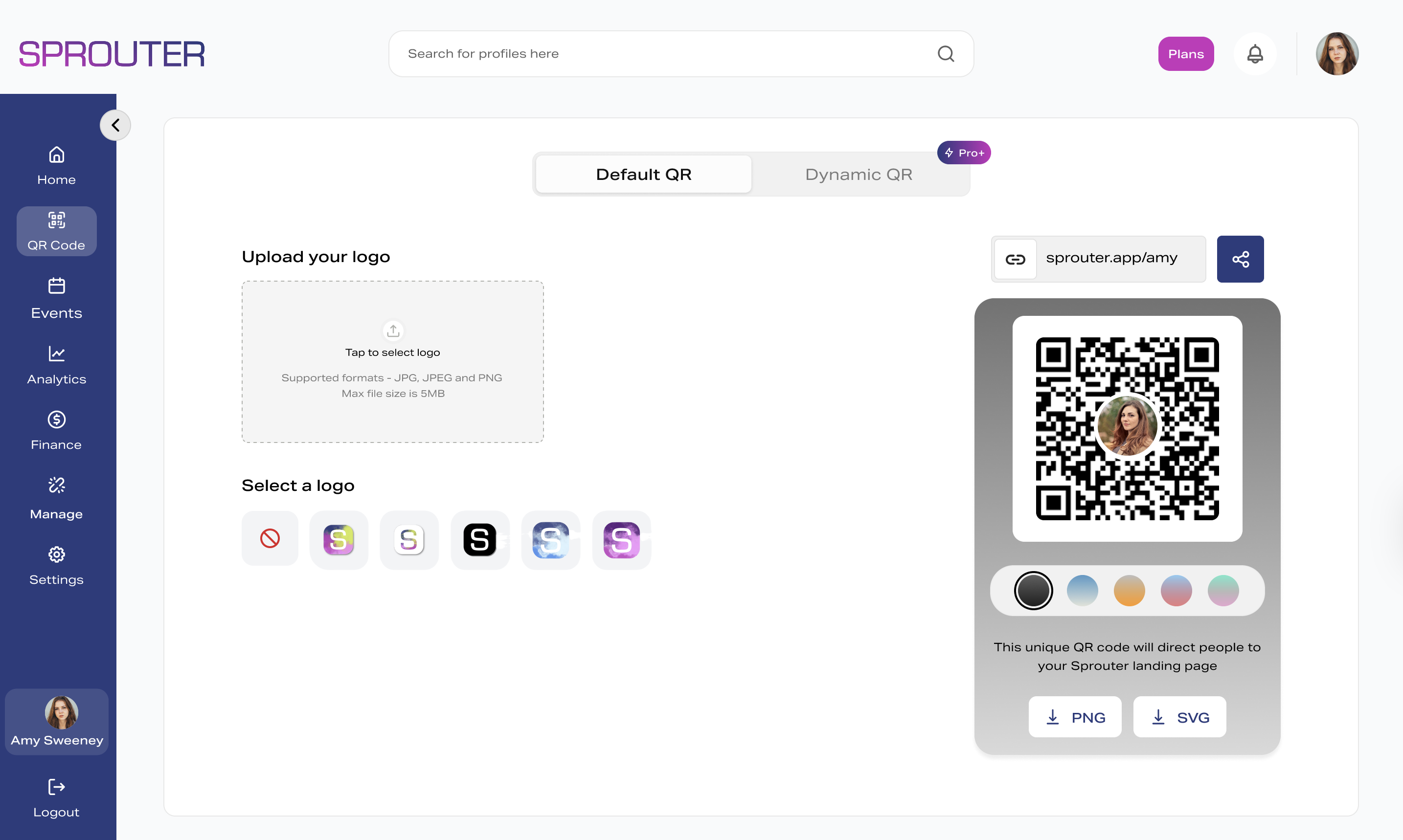
Sprouter’s Action Pages are designed specifically for this context—post-scan landing experiences that convert scanners into engaged contacts.
Content Management
Hundreds or thousands of products each need content. That content needs to be:
- Created (product information, brand content, promotional material)
- Organized (mapped to products, structured for access)
- Updated (changed as products evolve, refreshed for campaigns)
- Localized (multiple languages, regional variations)
Content at this scale requires systematic management, not ad-hoc creation.
Analytics Infrastructure
Understanding connected packaging performance requires analytics that track:
- Scan volume by product, time, geography
- Engagement depth (what do scanners access?)
- Conversion rates (what percentage take action?)
- Customer journey (how do scans connect to purchases?)
- Comparative performance (which products, content, approaches work best?)
Analytics needs to connect to broader business intelligence—scan data is most valuable when connected to sales data, marketing data, and customer data.
Commerce Capability
Some connected packaging use cases involve transactions. Repurchase, subscription, events, services—various commerce might flow from package scans.
Commerce capability requires:
- Product catalog integration
- Payment processing
- Order management
- Fulfillment connection
Brands without direct commerce infrastructure need platforms that provide it.
Customer Relationship Management
Contacts captured from packaging need somewhere to go. Email addresses, phone numbers, preferences, and engagement history need storage and activation capability.
CRM integration—or native relationship management within the connected packaging platform—enables the ongoing nurturing that makes captured contacts valuable.
The Content Challenge
Connected packaging at scale creates a content challenge most brands haven’t faced.
Consider a food company with 500 SKUs. Each product needs landing experience content. That’s 500 distinct content needs at minimum—more if products have variant pages, multiple content types, or localized versions.
Content needs include:
- Product information (often available but needs reformatting)
- Usage content (recipes, instructions, tips)
- Brand content (story, values, sustainability)
- Promotional content (offers, campaigns, loyalty)
- Compliance content (regulatory, safety, certification)
The content must be:
- Accurate (product claims are regulated)
- Current (outdated content damages credibility)
- Engaging (bland content doesn’t justify the scan)
- Mobile-optimized (phone screens, not desktop browsers)
Most brands underestimate this content requirement. They expect to deploy connected packaging quickly, then discover the content production needed to make it valuable.
Starting content development now—before 2027 deadlines pressure deployment—gives brands time to build quality content rather than rushing inadequate material.
The Phased Approach
Given infrastructure and content requirements, most brands should approach connected packaging in phases:
Phase 1: Pilot Products
Select a limited product set—perhaps top sellers, new launches, or strategic priorities—for initial connected packaging deployment. This pilot should:
- Test infrastructure end-to-end
- Develop content creation processes
- Measure consumer engagement response
- Learn what content resonates
- Identify operational challenges
Keep pilot scope manageable. Better to learn thoroughly from 20 products than superficially from 200.
Phase 2: Optimized Expansion
Based on pilot learnings, optimize infrastructure and content approach. Then expand to broader product portfolio:
- Apply successful content patterns
- Scale infrastructure for larger deployment
- Develop content production efficiency
- Build organizational capability
This expansion should still be controlled—measured growth rather than universal deployment.
Phase 3: Full Portfolio
With proven infrastructure, optimized content, and organizational capability, expand connected packaging to full product portfolio:
- Standardize deployment processes
- Systematize content production
- Integrate with broader marketing operations
- Establish ongoing optimization practices
Full portfolio deployment by 2027 requires starting phases 1 and 2 well before that deadline.
Consumer Expectations and Privacy
Connected packaging succeeds only if consumers engage. Understanding consumer expectations and concerns shapes effective deployment.
Consumers expect:
- Value: The scan should provide something worthwhile
- Relevance: Content should relate to the specific product
- Speed: No patience for slow loading or complex processes
- Privacy respect: Clear data practices, meaningful consent
- No spam: Permission to engage isn’t permission to overwhelm
Meeting these expectations requires thoughtful design, not just technical capability.
Privacy deserves particular attention. Connected packaging captures data about consumer behavior. Brands must:
- Disclose data collection clearly
- Obtain meaningful consent
- Provide privacy controls
- Use data responsibly
- Comply with regulations (GDPR, CCPA, etc.)
Privacy violations damage brand trust and create legal exposure. Building privacy-respecting practices from the start is essential.
The Competitive Timeline
GS1 Sunrise 2027 creates an industry-wide transition moment. Every brand will have QR codes on packaging by requirement. The differentiation is what those codes do.
Early movers—brands deploying connected packaging with genuine consumer value before 2027—will:
- Build consumer relationships while competitors focus on compliance
- Learn what works through testing while others rush to launch
- Establish engagement habits before the market becomes crowded
- Accumulate customer data while others start from zero
Late movers—brands treating 2027 as compliance deadline rather than opportunity—will:
- Deploy codes without consumer value strategy
- Rush content without quality optimization
- Miss the relationship-building window
- Play catch-up against established competitors
The competitive window is open now. It narrows as 2027 approaches. And it closes once connected packaging becomes universal expectation.
The Moment of Transformation
Product packaging is about to become something fundamentally new: an interactive channel for ongoing brand-consumer connection.
The brands that recognize this transformation—that see GS1 Sunrise 2027 as relationship opportunity rather than barcode compliance—will build consumer connection at scale unprecedented in consumer goods history.
Every package becomes a touchpoint. Every scan becomes a relationship invitation. Every product becomes a channel.
The infrastructure you build now determines whether your packaging participates in this transformation or merely complies with it.
Ready to transform your packaging into a consumer engagement channel? Sprouter provides complete connected packaging infrastructure: dynamic QR codes, Action Pages, conversion capability, and analytics. Build your direct consumer relationships before 2027.