

Two technologies dominate the conversation around bridging physical and digital experiences: NFC (Near Field Communication) and QR codes. Both enable instant connections between the real world and online content, but they work differently, cost differently, and serve different purposes.
Choosing the wrong technology wastes money and frustrates customers. Choosing the right one creates seamless experiences that drive engagement and revenue.
This guide breaks down the practical differences, real costs, and ideal applications for each technology—so you can make decisions based on your actual business needs rather than marketing hype.
How Each Technology Works
QR Codes: Visual Pattern Recognition
QR codes encode information in a two-dimensional pattern of black and white squares. Any smartphone camera can read this pattern and decode the embedded data—typically a URL that launches a web page, contact information, or other digital content.
The scanning process requires:
- A smartphone with a camera (any modern device)
- Line of sight to the code
- Adequate lighting
- Reasonable proximity (but can work from several feet away)
NFC: Radio Wave Communication
NFC uses electromagnetic fields to transfer data between devices in close proximity. An NFC tag contains a small chip and antenna that responds when an NFC-enabled device comes within range—typically 1-4 centimeters.
The interaction requires:
- An NFC-enabled smartphone (most modern phones, though support varies)
- Physical proximity (nearly touching the tag)
- No line of sight needed
- Works in complete darkness
The Compatibility Question
This is where the decision often gets made—or unmade.
QR Code Compatibility
QR codes work on virtually every smartphone manufactured in the last decade. Apple integrated native QR scanning into the iPhone camera starting with iOS 11 (2017). Android devices have had similar capability for years. No additional apps required.
This universal compatibility means your QR code reaches essentially 100% of smartphone users. For mass-market applications, this matters enormously.
NFC Compatibility
NFC support is widespread but not universal:
- High-end flagship phones: Nearly universal NFC support
- Mid-range smartphones: Variable support depending on manufacturer
- Budget devices: Inconsistent, often absent
- Older phones (4+ years): Limited support
- Geographic variation: Higher adoption in developed markets, lower in emerging economies
Industry estimates suggest 15-20% of smartphone users may not have NFC capability—a significant portion of potential audience for any marketing application.
Cost Comparison
QR Codes: Minimal Marginal Cost
Generating QR codes costs essentially nothing. The technology is open-source, and countless free and paid generators exist. The only costs are:
- Printing: Adding a QR code to existing materials costs nothing extra
- Platform fees: Dynamic QR services charge for tracking and editability
- Design: Customized, branded QR codes may require design work
For most businesses, QR code implementation adds negligible cost to existing marketing materials.
NFC: Physical Hardware Required
Every NFC touchpoint requires purchasing a physical tag or chip:
- Basic NFC tags: $0.50-$2.00 each in bulk
- Premium/branded tags: $2-10+ each
- NFC-enabled cards: $5-20+ each
- Custom form factors: Significantly higher
For a single high-touch application (like VIP business cards), this cost is trivial. For large-scale deployment across thousands of products, signage, or marketing materials, it adds up quickly.
Scanning Distance and Context
QR Codes: Flexible Distance
QR codes can be scanned from inches to several feet away, depending on size and resolution. This flexibility enables applications impossible with NFC:
- Large-format signage viewable across a room
- Product packaging on high shelves
- Posters and advertisements at eye level
- Table tents and menu displays
The scanning distance scales with code size—a large QR code on a billboard can be scanned from considerable distance.
NFC: Intimate Proximity
NFC’s 1-4 centimeter range requires near-contact. This limitation is actually an advantage for certain applications:
- Security: Can’t be accidentally triggered from a distance
- Intent: The tap action demonstrates clear user intent
- Premium feel: Physical interaction creates memorable moments
- Crowded environments: Works when multiple tags are close together
However, the proximity requirement eliminates many common marketing applications where users can’t or won’t physically approach the tag.
Analytics and Tracking
QR Codes: Comprehensive Data
Dynamic QR codes—those routed through tracking platforms—provide rich analytics:
- Total scans and unique users
- Time and date patterns
- Geographic location data
- Device types and operating systems
- Referral sources and conversion tracking
This data enables optimization, A/B testing, and attribution. Platforms like Sprouter provide granular scan analytics that reveal not just how many people scan, but when, where, and on what devices.
NFC: Limited Without Integration
Standard NFC tags don’t inherently track interactions. Achieving analytics comparable to QR codes requires:
- Integration with analytics platforms
- Server-side logging of each tap
- Often, a dedicated app
While sophisticated NFC analytics solutions exist, they add complexity and cost that QR codes don’t require.
Security Considerations
QR Codes: Visible but Vulnerable
QR codes are visually scannable, which creates both transparency and risk. Users can see a QR code exists, but they can’t verify where it leads without scanning.
“Quishing” attacks (QR code phishing) have risen dramatically—up 587% in 2024—as bad actors overlay malicious codes on legitimate ones or create deceptive codes in public spaces.
Defenses include:
- Branded QR codes with embedded logos (harder to replicate)
- Clear labeling of expected destinations
- Dynamic codes that can be monitored for unusual activity
NFC: Hidden but Harder to Compromise
NFC tags are often embedded invisibly, making them harder to tamper with. The close-range requirement also makes man-in-the-middle attacks more difficult.
However, NFC tags can be cloned, and malicious tags can be placed in unexpected locations. The tap-to-interact model means users may engage without thinking about security.
Neither technology is inherently more secure—both require thoughtful implementation.
Use Case Analysis
Where QR Codes Excel
Marketing and Advertising QR codes on print materials, signage, and displays drive traffic to digital destinations at scale. The ability to update destinations without reprinting (with dynamic codes) makes them ideal for campaigns.
Product Packaging Consumer goods, food packaging, and retail products benefit from QR codes that link to product information, recipes, warranty registration, and authentication.
Menus and Hospitality Restaurants, hotels, and service businesses use QR codes for menus, booking systems, and information access. The pandemic accelerated adoption; convenience keeps it growing.
Events and Ticketing Event tickets delivered via QR code enable digital distribution and fast scanning. Sprouter’s event ticketing uses QR codes for exactly this purpose.
Multi-Location Campaigns When deploying across hundreds or thousands of locations, QR codes’ zero marginal cost makes them the only practical choice.
Where NFC Shines
Contactless Payments NFC-enabled payment terminals are ubiquitous. For payment applications with existing infrastructure, NFC is the standard.
Premium Brand Experiences Luxury goods, high-end packaging, and VIP experiences benefit from NFC’s tap interaction. The physical gesture creates memorable moments that QR scanning doesn’t match.
Access Control Building entry, hotel rooms, and secure areas use NFC for proximity-based authentication. The close-range requirement is a security feature.
Product Authentication High-value goods (luxury items, pharmaceuticals, collectibles) use NFC for tamper-evident authentication that’s harder to counterfeit than QR codes.
Business Cards Premium digital business cards increasingly use NFC for a polished first impression. The “tap to connect” gesture feels more professional than “scan my code.”
The Hybrid Approach
Smart businesses don’t choose one technology exclusively—they deploy each where it provides maximum value.
Consider a retail brand:
- QR codes on store windows, shelf signage, and packaging for broad customer engagement
- NFC on premium loyalty cards for VIP customers
- QR codes in advertising and social media for campaign tracking
- NFC in high-traffic store locations where staff can guide interactions
This strategic deployment matches technology to use case, maximizing impact while controlling costs.
Decision Framework
Choose QR Codes When:
- Reaching the broadest possible audience matters
- Budget constraints require zero marginal cost per touchpoint
- Analytics and tracking are essential
- Scanning distance flexibility is needed
- Quick implementation without physical hardware is required
- You need the ability to change destinations without replacing materials
Choose NFC When:
- Creating premium, memorable brand interactions
- Security through proximity is important
- Payment infrastructure already exists
- Target audience skews toward flagship device users
- Physical interaction enhances the experience
- Authentication and anti-counterfeiting are priorities
Choose Both When:
- Different touchpoints serve different purposes
- Budget allows strategic deployment
- You want redundancy (QR backup for users without NFC)
- Premium and mass-market audiences both matter
The Bottom Line
For most business applications focused on customer engagement, marketing, and measurable ROI, QR codes deliver superior results across nearly every metric that matters. Their universal compatibility, zero marginal cost, and comprehensive analytics make them the practical choice for scalable deployment.
NFC earns its place in specific high-value applications where the tap interaction enhances brand perception, security requirements favor proximity, or existing infrastructure makes it the logical choice.
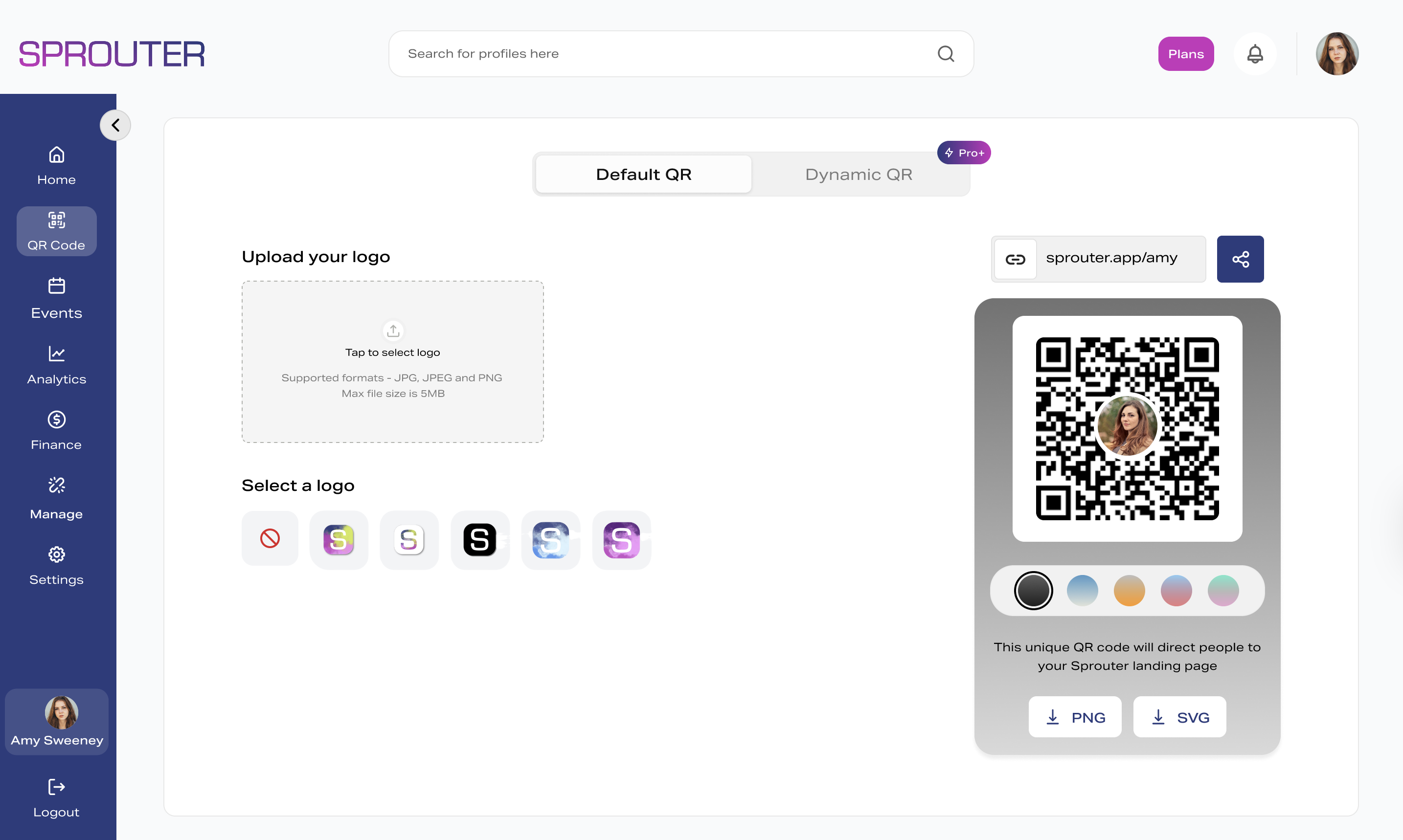
Sprouter focuses on QR codes for good reason—they serve the broadest range of business needs while providing the analytics and flexibility that drive real results. Whether you’re creating Action Pages for digital presence, generating dynamic QR codes for marketing campaigns, or selling event tickets, QR technology provides the reach and measurement that modern businesses require.
The technology debate matters less than the strategy. Choose based on your actual use case, budget, and audience—not on which technology sounds more sophisticated.
Ready to implement QR codes that drive real results? Start with Sprouter and create dynamic QR codes with built-in analytics, connected to Action Pages that convert.