

QR codes have evolved from a pandemic necessity into a permanent fixture of modern marketing. With over 41 million scans recorded globally in 2025 alone—a 433% increase over four years—these simple squares have become one of the most powerful tools for connecting offline experiences to online engagement.
But here’s the challenge: not all QR codes perform equally. The difference between a code that gets scanned and one that gets ignored often comes down to a few critical factors that most businesses overlook.
Why Most QR Codes Fail
Before diving into what works, let’s address what doesn’t. Poor contrast, cluttered customization, and low print quality still account for the majority of failed scans. Even technically functional codes often underperform because they lack context, appear untrustworthy, or simply don’t give people a compelling reason to scan.
Research shows that 55% of marketers cite customer confusion as a barrier to QR code engagement, while 47% point to “QR code overload” as a growing problem. When people see QR codes everywhere without clear value propositions, they stop scanning altogether.
The Foundation: Static vs. Dynamic QR Codes
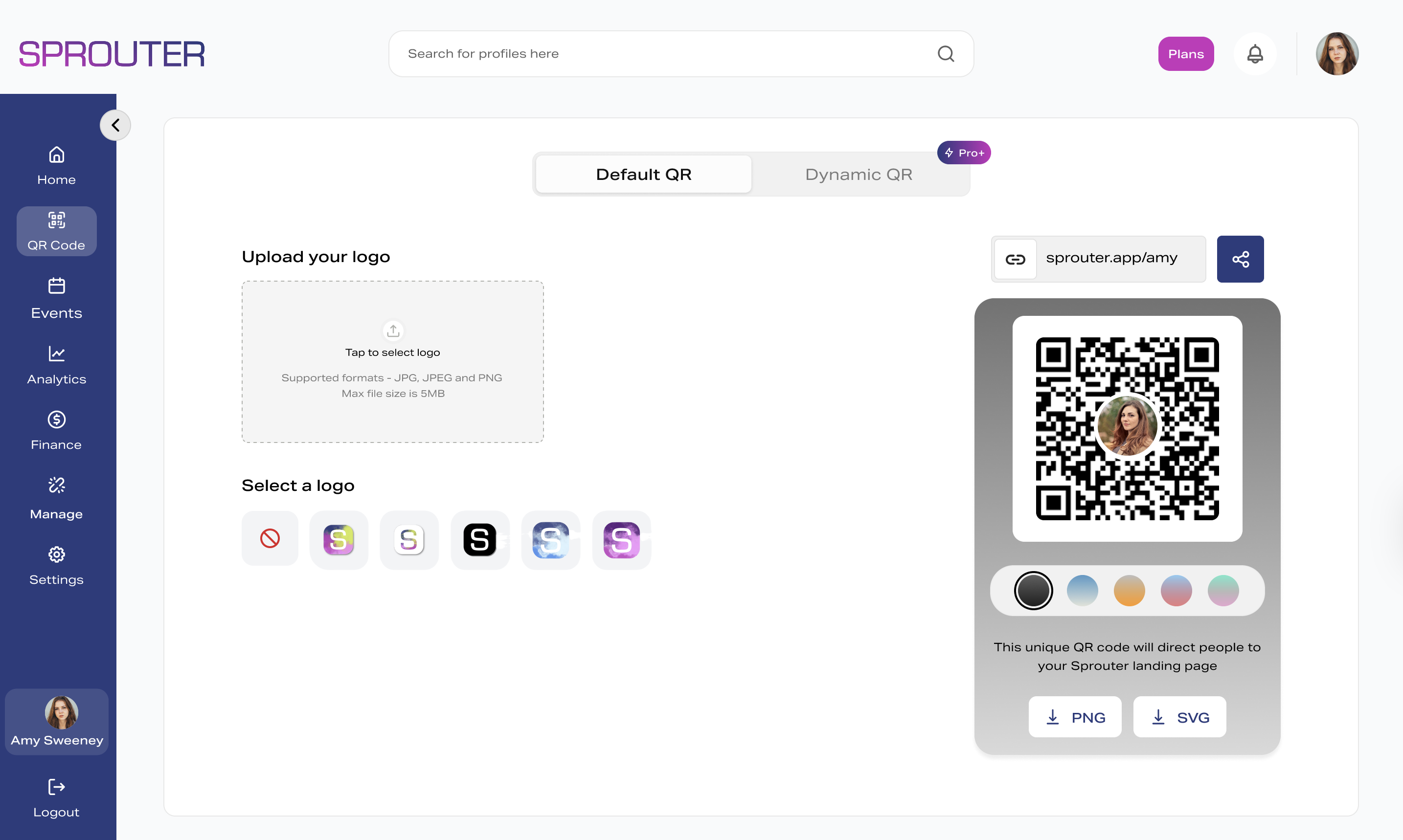
The first decision you’ll make determines everything that follows. Static QR codes encode a fixed URL directly into the pattern—once printed, they can never be changed. Dynamic QR codes, on the other hand, route through an intermediary that lets you update the destination anytime without reprinting.
For any serious marketing application, dynamic QR codes are essential. They enable real-time destination changes, comprehensive scan analytics, and the flexibility to optimize campaigns based on actual performance data. Platforms like Sprouter make dynamic QR codes accessible even on basic plans, with advanced scan analytics available for users who need deeper insights into device types, locations, and engagement patterns.
The ability to change where a code points without reprinting anything has become a must-have for agile teams running campaigns across multiple locations, channels, or product packaging.
Design Principles That Drive Scans
Contrast Is Non-Negotiable
QR codes work through contrast detection. Dark modules on light backgrounds scan reliably; anything that compromises this relationship creates friction. While branded colors can enhance recognition, they should never sacrifice the fundamental contrast ratio needed for reliable scanning.
Test your designs before mass printing. What looks good on screen may scan poorly in real-world conditions with varied lighting, surface textures, and viewing distances.
Customization That Builds Trust
Nearly half of marketers say adding a business logo to their QR code design is the most valuable customization option. This isn’t just about aesthetics—it’s about security. With QR code phishing attacks (known as “quishing”) rising 587% in 2024, branded codes help reassure potential scanners that they’re interacting with a legitimate business.
The key is balance. Artistic and branded QR codes increase trust, recognition, and scan intent when done correctly. But over-customization that compromises scannability defeats the purpose entirely.
Size and Placement Matter
Good QR experiences account for scanning distance, surface texture, and environmental factors without relying on ideal scenarios. A code that works perfectly under controlled conditions can fail entirely when placed on a reflective surface, positioned in low light, or printed too small for the intended viewing distance.
General guidelines suggest a minimum size of 2cm x 2cm for close-range scanning (within arm’s length) and proportionally larger sizes as viewing distance increases. Avoid folds, reflections, or areas that require awkward positioning to scan.
The Call-to-Action Factor
A QR code without context is just a mysterious square. People are significantly more likely to scan codes that provide immediate, clear value. The phrase “Scan to…” followed by a specific benefit consistently outperforms codes with no accompanying text.
Effective CTAs include:
- “Scan for exclusive menu” (restaurants)
- “Scan to save your spot” (events)
- “Scan for behind-the-scenes content” (entertainment)
- “Scan to claim your discount” (retail)
The more specific the promised value, the higher the scan rate. Vague prompts like “Scan here” or “Learn more” generate far less engagement than concrete offers.
What Happens After the Scan
This is where most QR strategies fall apart. Users expect relevance, speed, and value when they scan—not generic homepages or slow-loading sites. QR-initiated journeys see an average click-through rate of 37%, but only when the post-scan experience delivers on the promise.
Your landing destination should:
- Load in under 3 seconds (53% of mobile users abandon sites that take longer)
- Be mobile-optimized (over 62% of all web traffic now comes from mobile devices)
- Deliver the specific value promised by the CTA
- Provide a clear next action
Sprouter’s Action Pages are designed specifically for this purpose—mobile-first destinations that load quickly and guide visitors toward conversion with customizable links, media embeds, and contact capture tools.
Tracking What Matters
Dynamic QR codes unlock analytics capabilities that static codes simply can’t provide. Essential metrics include:
- Total scans: Raw volume indicates reach
- Unique users: Distinguishes repeat scanners from new engagement
- Time of scan: Reveals when your audience is most active
- Location data: Shows geographic performance patterns
- Device information: Helps optimize for your actual audience
However, only 31% of marketers currently monitor the post-scan journey, and just 16% tie QR code engagement directly to revenue. This represents a massive opportunity for businesses willing to invest in proper attribution.
Platforms with comprehensive scan analytics—like Sprouter’s PRO+ tier—provide the granular data needed to understand not just how many people scan, but what they do afterward and how that translates to business outcomes.
Industry-Specific Applications
Restaurants and Hospitality
Digital menus have achieved near-universal adoption, with 75% of restaurants worldwide now using QR codes for menu access. But the opportunity extends beyond menus to reservation systems, loyalty programs, and direct feedback collection.
Events and Entertainment
Event ticketing has embraced QR codes for delivery and check-in, but smart organizers also use them for pre-event engagement, on-site experiences, and post-event follow-up. The key is creating a connected journey rather than isolated touchpoints.
Retail and E-commerce
QR codes on product packaging boost consumer trust by 40% when linked to authenticity verification, detailed product information, or exclusive content. They bridge the gap between physical products and digital experiences.
Future-Proofing Your QR Strategy
The QR code landscape continues evolving. Trends to watch include:
- AR integration: 57% of marketers plan to integrate augmented reality with QR codes
- AI-powered personalization: 84% plan to combine AI and machine learning with QR experiences
- 2D barcode standardization: By 2027, supply chain standards will shift from traditional UPC barcodes to 2D codes
The businesses that build robust QR infrastructure now will be positioned to adopt these capabilities as they mature.
Getting Started
Creating effective QR codes doesn’t require complex tools or technical expertise. Start with these fundamentals:
- Choose dynamic over static for any code you’ll use in marketing
- Design for trust with branded elements that don’t compromise scannability
- Write specific CTAs that promise clear value
- Optimize landing destinations for mobile speed and relevance
- Track performance and iterate based on real data
Sprouter’s platform makes this process straightforward, offering dynamic QR code generation, customizable Action Pages for post-scan destinations, and analytics to measure what’s working. Whether you’re creating codes for event promotion, product packaging, or marketing campaigns, the principles remain the same: clear value, trustworthy design, and seamless post-scan experiences.
The businesses winning with QR codes in 2026 aren’t those using the most sophisticated technology—they’re the ones applying these fundamentals consistently while their competitors continue scattering generic codes across every surface and hoping for results.
Ready to create QR codes that actually convert? Get started with Sprouter and see how dynamic QR codes, Action Pages, and scan analytics work together to turn offline touchpoints into measurable engagement.