The two-dimensional barcode invented in 1994 to track car parts has become one of the most powerful marketing tools available to small businesses. In 2026, QR codes aren’t a novelty—they’re expected. Over 90% of marketers now use QR codes in their campaigns, and 86% plan to increase their usage over the next 12 months.
For small businesses, QR codes offer something remarkable: the ability to make every physical touchpoint measurable. That flyer you handed out at the farmer’s market? You can track exactly how many people scanned it. The business card you left at a networking event? You’ll know when and where it was scanned. The table tent at your pop-up shop? It becomes a direct line to your online presence.
This guide covers everything you need to know about QR code marketing in 2026, from choosing the right type of code to measuring campaign performance and avoiding common mistakes.
Why QR Codes Matter for Small Business Marketing
The numbers tell a compelling story. The global QR code market reached $13 billion in 2025 and is projected to hit $33 billion by 2031, growing at nearly 17% annually. More importantly for small businesses, over two-thirds of consumers have scanned a QR code in the past year, and half of Gen Z and Millennials scan codes at least once a week.
This widespread adoption solves a problem that has plagued traditional marketing for decades: attribution. When you place an ad in a local newspaper, how do you know it’s working? When you hang a poster in a coffee shop, how many people actually visit your website because of it?
QR codes create a direct, trackable bridge between your offline marketing and online presence. Every scan represents a moment when someone chose to engage with your business. That data transforms marketing from guesswork into strategy.
Beyond tracking, QR codes reduce friction in the customer journey. Rather than asking someone to remember your website address, type it into their phone, and navigate to the right page, a QR code takes them exactly where you want them to go in a single scan. This immediacy capitalizes on interest at the exact moment it peaks.
Static vs. Dynamic QR Codes: Choosing the Right Type
Before creating your first marketing QR code, you need to understand the fundamental difference between static and dynamic codes.
Static QR codes encode information directly into the pattern of squares. The data—typically a URL—is fixed permanently. If you need to change where the code points, you must create and print an entirely new code. Static codes work well for permanent information like a vCard with your contact details, but they offer no tracking capabilities and no flexibility.
Dynamic QR codes work differently. Instead of encoding your final destination directly, they encode a short redirect URL. When someone scans the code, they’re briefly routed through a tracking system before landing at your intended destination. This architecture enables two crucial capabilities: you can change where the code points without reprinting anything, and you can track every scan with detailed analytics.
For marketing purposes, dynamic QR codes are almost always the better choice. They let you update campaigns on the fly, A/B test different landing pages, and gather the data you need to optimize performance. The slight additional cost is negligible compared to the flexibility and insights you gain.
Where to Use QR Codes in Your Marketing
The versatility of QR codes means they can enhance virtually every marketing channel. Here’s how small businesses are putting them to work.
Print Advertising and Signage
Print advertising becomes measurable when you add a QR code. Whether you’re running ads in local magazines, placing posters around town, or distributing flyers at events, a QR code transforms passive viewing into active engagement.
The key is giving people a compelling reason to scan. A QR code that simply says “visit our website” won’t perform as well as one offering a specific value: “Scan for 15% off your first order” or “Scan to see our full menu” or “Scan for exclusive behind-the-scenes content.” The call to action matters as much as the code itself.
Product Packaging
Smart product packaging has emerged as a major trend, and QR codes are central to it. With GS1 Sunrise 2027 requiring 2D barcodes on all products, this trend is accelerating. A code on your packaging can link to detailed product information, how-to videos, recipes, care instructions, or sustainability certifications that won’t fit on a label.
This creates value beyond the initial purchase. A customer who scans to watch a tutorial video has a deeper engagement with your brand than one who simply uses the product. That engagement translates to loyalty, repeat purchases, and word-of-mouth recommendations.
Business Cards and Networking
The traditional business card has a problem: it’s one-directional. You hand someone your card, and then you wait to see if they reach out. A QR code changes this dynamic.
A digital business card QR code can include your contact information (saved to their phone with a single tap), links to your website and social profiles, a portfolio or product catalog, and even a way for them to book a meeting directly. You can track when and where your cards are being scanned, giving you insight into which networking events and contacts are most valuable.
Events and Pop-Up Shops
Events present a perfect opportunity for QR code marketing. You can use codes for contactless check-in, to share event schedules and maps, to collect feedback, to promote special offers, and to capture email addresses for follow-up marketing.
At a pop-up shop, QR codes serve multiple functions. Customers can scan to join your email list, access exclusive discounts, learn more about products, or complete purchases if inventory is limited. Each scan captures first-party data while providing value to the customer.
Creating Effective QR Code Campaigns
A QR code is only as effective as the campaign surrounding it. Here’s how to maximize your results.
Design for Scannability
While customization can make your QR codes more visually appealing, functionality must come first. Black modules on a white background offer the highest contrast and most reliable scanning. If you customize colors, maintain strong contrast between light and dark elements.
Size matters too. The minimum scannable size is about 1cm x 1cm, but bigger is better for marketing materials. A code that’s too small or placed too far from the viewer will be ignored. As a rule, the scanning distance in centimeters should be about ten times the code’s size in centimeters.
Create Compelling Calls to Action
Never assume people know what will happen when they scan your code. Always include a clear call to action that explains the benefit: “Scan to claim your free sample,” “Scan for today’s specials,” “Scan to download our app.”
The more specific and valuable the promise, the higher your scan rate will be. Generic prompts like “Scan here” or “Learn more” underperform compared to specific value propositions.
Optimize the Landing Experience
Where your QR code leads matters as much as the code itself. Since nearly all scans come from mobile devices, your landing page must be mobile-optimized. This means fast load times (under 3 seconds), easy-to-tap buttons, readable text without zooming, and a clear path to the promised value.
Don’t send QR scans to your homepage. Create dedicated landing pages that deliver exactly what your call to action promised. Someone who scanned for a discount should land directly on a page with that discount, not navigate through your entire site to find it.
Measuring QR Code Marketing Performance
One of the greatest advantages of QR code marketing is measurability. Here’s what to track and how to interpret the data.
Essential Metrics
Scan count tells you how many times your code was scanned. This raw number indicates overall engagement but doesn’t tell the whole story.
Unique scans filter out repeat scans from the same device, giving you a better sense of how many individual people engaged with your code.
Scan location (when available) shows you where people are scanning, which helps you understand which placements perform best and where your audience is located.
Time of scan reveals when people engage with your marketing, helping you optimize timing for future campaigns.
Calculating ROI
To determine whether your QR code marketing is working, connect scan data to business outcomes. This might mean tracking how many scans led to purchases, email signups, appointment bookings, or other valuable actions.
Set up your landing pages to track conversions, and compare the cost of your campaign (printing, placement, QR code platform fees) against the value of the results. A dynamic QR code platform with good analytics makes this calculation straightforward.
Iterative Improvement
Use your data to continuously improve. If one placement dramatically outperforms others, invest more there. If scans are high but conversions are low, optimize your landing page. If certain calls to action drive more scans, replicate that approach across other campaigns.
The businesses seeing the best results from QR code marketing treat it as an ongoing optimization process, not a set-and-forget tactic.
Common Mistakes to Avoid
Even experienced marketers make these errors. Here’s what to watch for.
Placing codes where they can’t be scanned easily—on moving vehicles, at odd angles, or in locations where people can’t stop to pull out their phones—wastes your investment.
Using static codes for campaigns means losing all tracking capability and flexibility. Unless you have a specific reason to use static codes, default to dynamic.
Sending scans to non-mobile-optimized pages creates friction that kills conversions. Every QR code landing page should be designed mobile-first.
Neglecting to include a call to action assumes people will scan out of curiosity. Some will, but you’ll get dramatically better results by telling them why they should scan.
Forgetting to test codes before printing leads to embarrassing failures. Always verify functionality across multiple devices.
Getting Started with QR Code Marketing
Ready to put QR codes to work for your business? Start small with a single campaign. Create a dynamic QR code for one specific purpose—perhaps a special offer for your next event or a link to your email signup on your business cards. Track the results, learn what works, and expand from there.
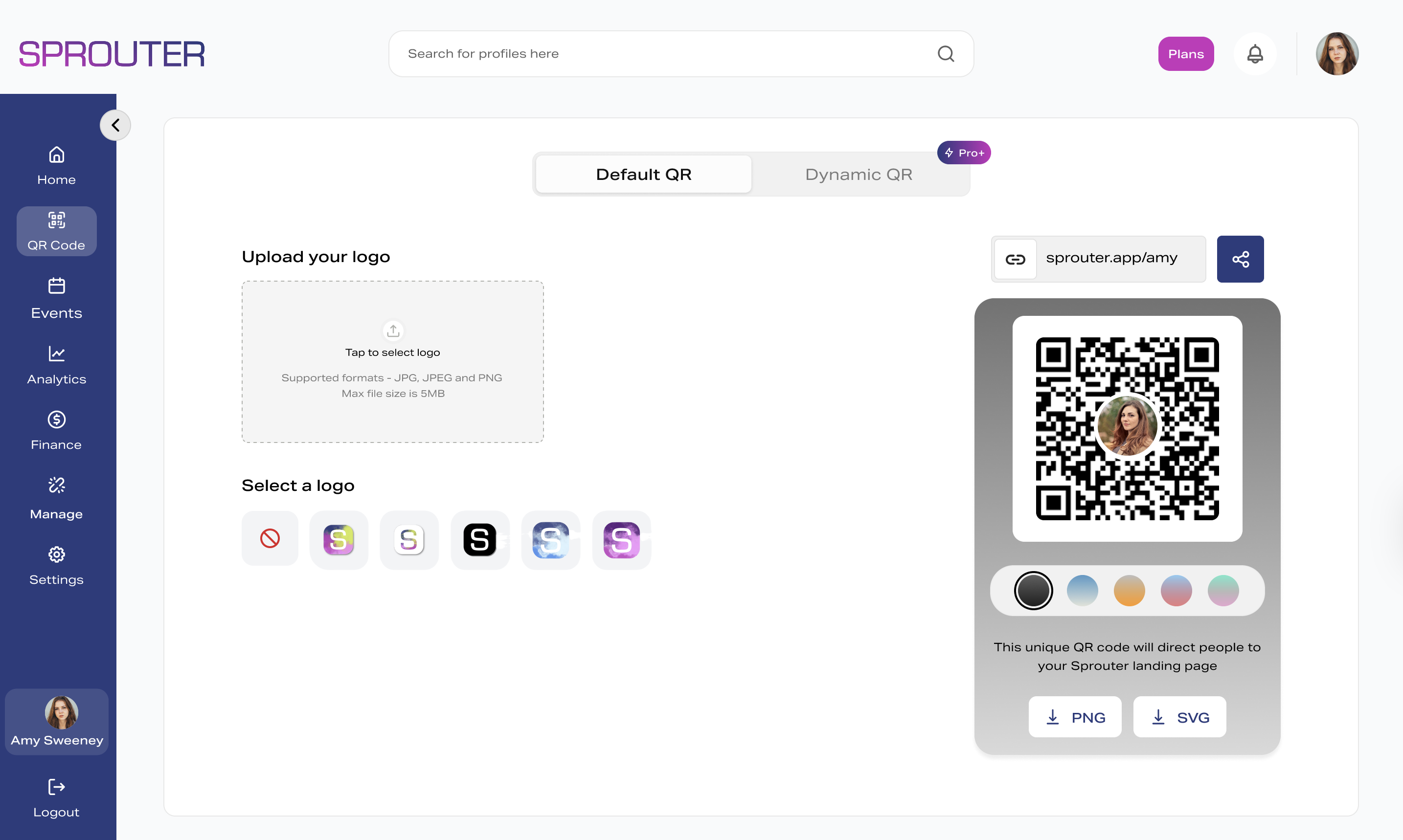
Platforms like Sprouter make it easy to create QR codes that connect to Action Pages, event ticketing, and payment processing—giving you a complete toolkit for bridging offline and online engagement. The technology is accessible, the audience is ready, and the data will guide your optimization. The only thing left is to begin.
Ready to start your QR code marketing strategy? Sprouter’s Action Pages provide mobile-optimized landing pages that integrate seamlessly with QR codes, letting you track engagement, capture leads, and drive conversions from every scan. View pricing and plans to get started.