In a world saturated with digital content, audiences are no longer impressed by high-production visuals alone. They want to feel something in real life. They want to step into stories, shape outcomes, share moments instantly, and leave feeling like they were part of something unique.
This shift has elevated events from marketing tactic to strategic imperative. 78% of organizers now identify in-person events as their organization’s most impactful marketing channel. 51% of companies are increasing experiential marketing investment through 2026. And 90% of consumers are more inclined to buy from a brand after participating in an experiential campaign.
The numbers point to a fundamental truth: when you create real experiences for real people, you generate marketing results that digital advertising simply cannot match.
The Experiential Advantage
Events work differently than any other marketing channel.
When someone attends your event, they’ve made a deliberate choice to spend their time with your brand. They’ve traveled to a location, blocked their calendar, and shown up physically. This self-selection creates an audience quality no targeting algorithm can replicate.
During the event, you have their full attention. Not the fractured attention of someone scrolling while watching TV. Not the distracted attention of someone with twelve browser tabs open. Real, focused, in-the-room attention. Research shows 64% of consumers retain positive impressions of brands they interact with physically—a number that dwarfs recall rates for digital advertising.
The trust impact is equally dramatic. 77% of consumers say their trust increased after interacting with a brand at a live event. Trust built in person transfers to all subsequent brand interactions, improving performance across every other channel.
Perhaps most importantly, events create emotional connection that digital touchpoints cannot achieve. Physical experiences engage multiple senses simultaneously, creating memories encoded more deeply than any screen-based interaction. When someone smells, tastes, touches, and experiences your brand, they form connections that display advertising cannot replicate.
The ROI Reality
Marketers often hesitate to invest in events because ROI feels harder to measure than digital advertising. But when measured properly, experiential marketing consistently outperforms.
Half of all marketers report that experiential campaigns outperform other marketing methods in terms of returns. Global experiential marketing spend is projected to reach $128 billion, reflecting growing recognition of superior economics. Companies are allocating between $500,000 and $1 million annually to experiential marketing—and finding these investments deliver better results than equivalent digital spend.
The key is measuring the full value events create:
Direct revenue from ticket sales, on-site purchases, and immediate conversions provides the most visible return. For many events, ticket revenue alone justifies the investment.
Lead generation captures contact information and interest signals from attendees. Event leads typically convert at higher rates than any other source because of the trust and relationship already established.
Data collection builds first-party data assets through registration, check-in, session attendance, and engagement tracking. In an era of disappearing third-party data, this collection value is substantial.
Brand lift measures changes in awareness, sentiment, and consideration following events. While harder to quantify, brand improvement compounds over time through improved performance across all marketing channels.
Content creation generates photos, videos, testimonials, and stories that fuel marketing for months after the event ends. When attendees share their experiences, you receive organic reach that would cost enormously to purchase.
Community building deepens relationships between your brand and customers, and between customers themselves. These connections increase retention and lifetime value in ways that compound long after the event.
When all these value streams are combined, events typically deliver ROI that digital advertising cannot approach.
Why 2026 Is the Tipping Point
Several forces are converging to make events more valuable than ever.
Digital fatigue has reached critical mass. After years of screen saturation accelerated by the pandemic, consumers crave physical experiences. They want to escape their feeds, not scroll through more of them. Events offer something increasingly rare and valuable: genuine human connection in physical space.
Privacy changes have degraded digital advertising. Third-party cookie deprecation, iOS tracking changes, and tightening regulations have made digital targeting less precise and more expensive. Events capture first-party data with explicit consent, building marketing assets that appreciate rather than depreciate.
Ad fatigue has accelerated. 61% of consumers actively avoid brands that show repetitive ads. Platform algorithms respond to declining engagement by increasing frequency, accelerating fatigue in a downward spiral. Events create positive associations that advertising cannot.
Younger generations prioritize experience over possession. Millennials and Gen Z allocate more of their spending to experiences than previous generations did at the same age. They share experiences on social media, making event attendees into organic brand ambassadors.
The bar for “content” has risen impossibly high. AI can generate infinite content. Production quality that once stood out is now table stakes. The only content that truly differentiates is authentic, real-world experience that cannot be simulated.
These forces explain why 80% of organizers believe in-person events will become increasingly critical to their organization’s success in the coming years. The trends all point in the same direction.
The Full Loop: From Event to Ongoing Relationship
The mistake many brands make with events is treating them as isolated moments rather than relationship accelerators.
An event should be a conversion point in a longer journey. Before the event, promotion builds awareness and captures registrations that grow your database. The event itself creates the memorable experience and emotional connection. After the event, follow-up nurtures attendees into ongoing customers, community members, and advocates.
This full loop requires infrastructure that connects each phase:
Pre-event systems handle registration, ticket sales, and communication. They capture attendee information and preferences, segment audiences for personalized messaging, and build anticipation for the experience ahead.
During-event systems manage check-in, track attendance at sessions or activities, enable real-time engagement through polls or Q&A, and capture data about what attendees actually did—not just that they showed up.
Post-event systems deliver follow-up communication, share resources and recordings, capture feedback, and transition event attendees into ongoing marketing nurture.
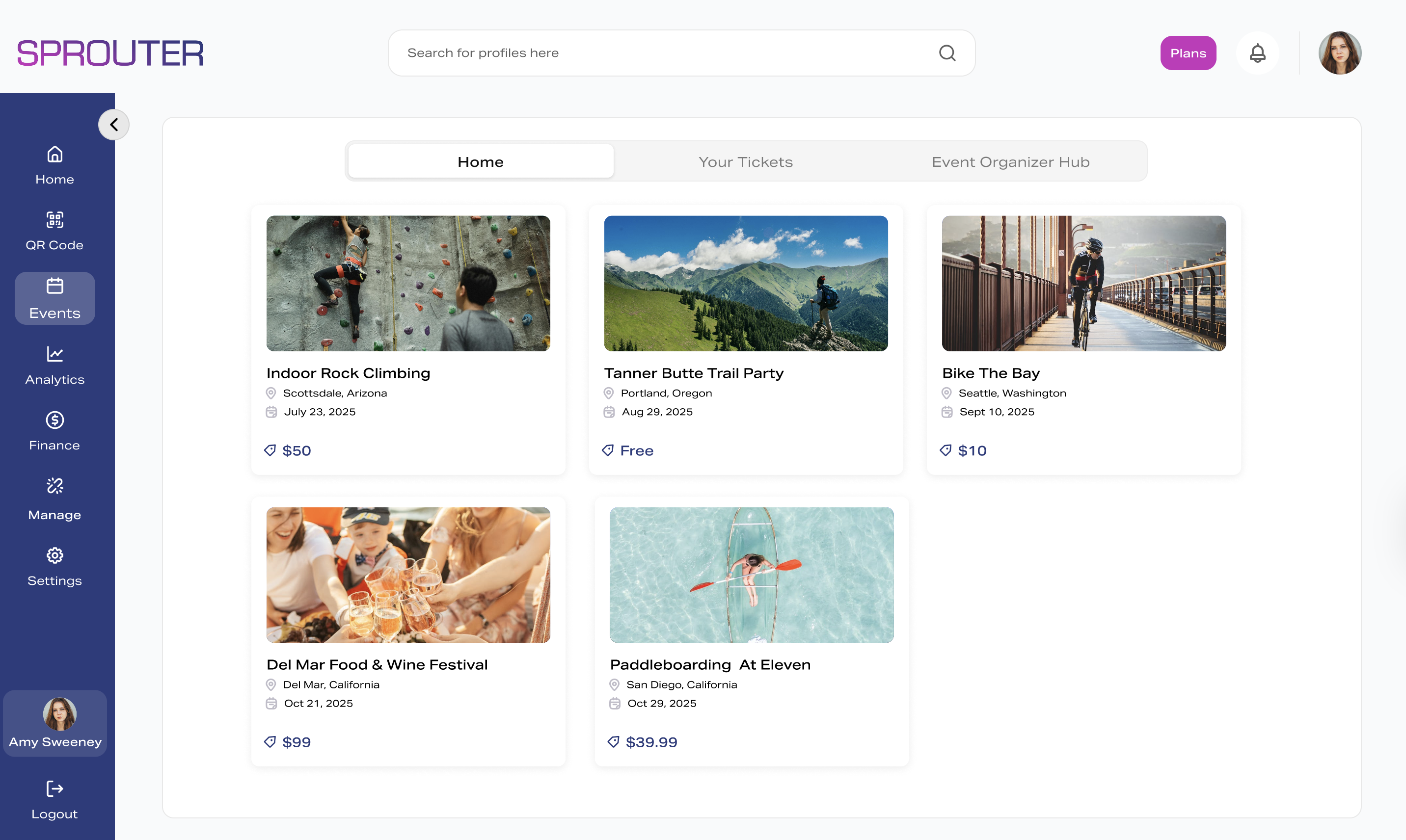
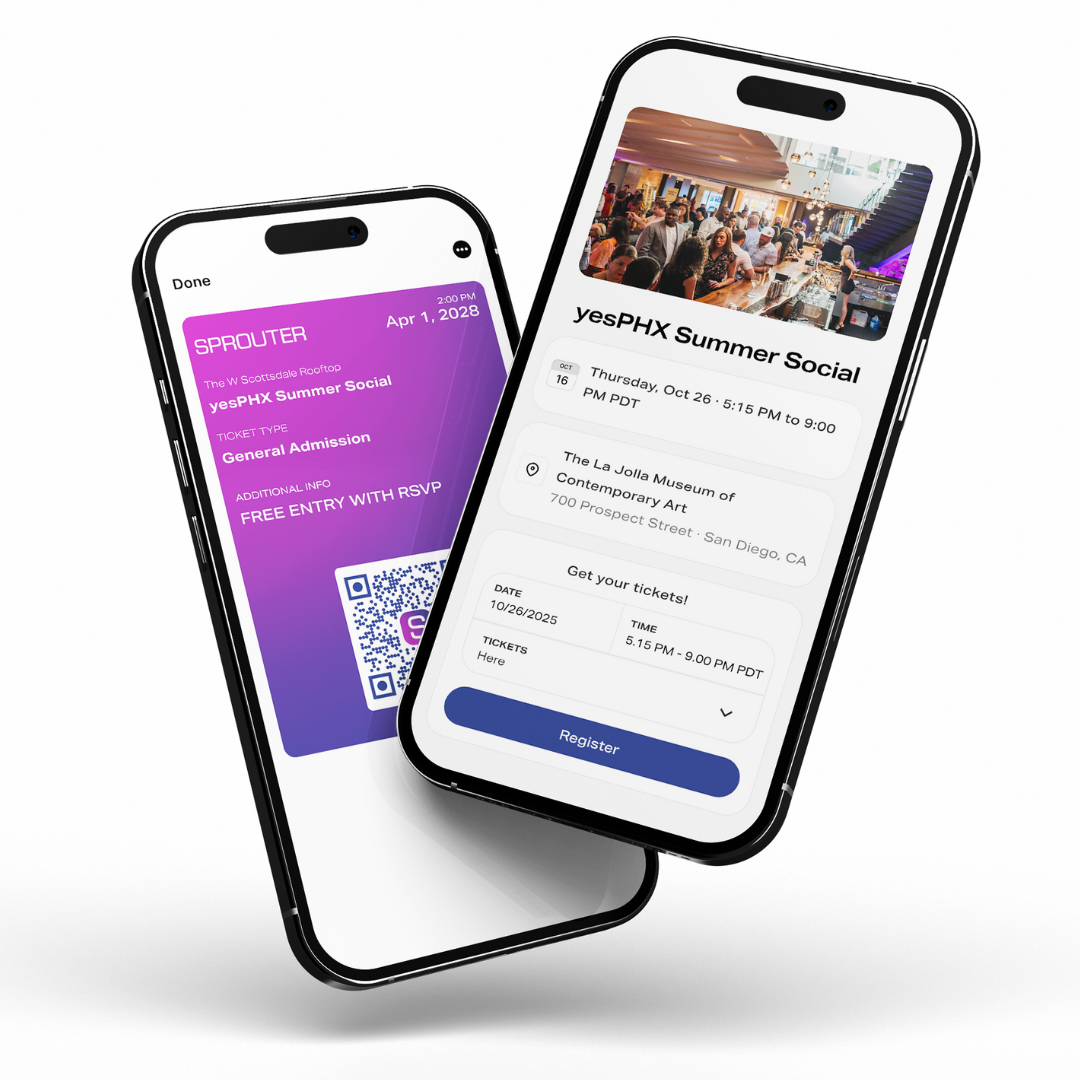
Platforms like Sprouter are designed for this complete loop. Event pages and ticketing capture attendees and process payments. QR-based check-in tracks who actually arrived and what they engaged with. Action Pages serve as persistent hubs where attendees can access resources, join community spaces, and continue their relationship with your brand. Analytics connect the full journey from first registration to ongoing engagement.
Without this infrastructure, events remain isolated moments. With it, every event becomes an engine for relationship building that compounds over time.
Event Formats for Every Business
Events don’t require massive budgets or stadium venues. The most effective experiential marketing in 2026 emphasizes intimate gatherings and authentic connection over spectacle and scale.
Workshops and classes teach skills related to your product or expertise area. A cookware brand hosts cooking classes. A software company runs training sessions. A fitness brand offers workout experiences. These formats provide clear value while demonstrating your expertise and product benefits.
Meetups and networking events bring your community together for connection. The content is the people themselves—you provide the venue and facilitation. These events are relatively inexpensive to produce but create strong community bonds.
Pop-ups and temporary retail create urgency and exclusivity. The limited-time nature drives attendance while allowing you to test markets, launch products, or reach audiences in new locations without permanent retail commitment.
Conferences and summits position your brand as a thought leader in your industry. These larger-format events require more investment but establish authority and attract high-value attendees.
Customer appreciation events reward existing customers while creating opportunities to deepen relationships and gather feedback. These events demonstrate that you value the relationship beyond transactions.
Launch events build anticipation and excitement around new products or offerings. The exclusivity of being among the first to experience something creates buzz that extends far beyond attendees.
Partner and collaborative events share costs and audiences with complementary brands. A coffee brand and a bookstore co-host a reading event. A fitness studio and a nutrition brand partner on a wellness workshop. These collaborations expand reach while keeping investment manageable.
The format should match your resources, audience, and objectives. The principle remains constant: create valuable experiences that give people reason to show up, engage, and remember.
Measuring What Matters
Event ROI measurement has evolved beyond simple attendance counting.
Attendance quality matters more than raw numbers. Ten highly qualified leads who attended every session are worth more than a hundred casual visitors who grabbed swag and left. Track engagement depth, not just headcount.
Engagement time reveals true interest. How long did people stay? Which sessions drew the most attention? Where did people linger versus pass through? These signals indicate the quality of attention you earned.
Conversion pathways connect event attendance to downstream actions. How many attendees made purchases? Joined your email list? Requested demos? Downloaded resources? Attended subsequent events? These pathways show the full value events generate.
Sentiment analysis captures the emotional impact through surveys, social listening, and qualitative feedback. Net Promoter Score (NPS) specifically measures likelihood to recommend—a leading indicator of organic advocacy.
Social amplification measures the reach your event earned through attendee sharing. How many posts? What reach? What sentiment? This organic amplification extends your event’s impact far beyond physical attendees.
Post-event behavior tracks how event attendees differ from other customers. Do they purchase more? Stay longer? Engage more deeply? Refer more friends? These behavioral differences reveal the true lifetime value of event-acquired customers.
Build measurement into your event design from day one. Badge scans, mobile check-ins, QR-code interactions, and post-event surveys all capture data that transforms events from gut-feel marketing to data-driven strategy.
Common Mistakes to Avoid
Event marketing success requires avoiding several common pitfalls.
Treating events as isolated campaigns rather than relationship touchpoints wastes most of their value. Without pre-event capture and post-event nurture, you’re creating memorable moments that fade without lasting business impact.
Over-focusing on spectacle at the expense of connection misreads what modern audiences want. Younger generations prioritize authentic, intimate gatherings over flashy productions. Sometimes smaller is better.
Failing to capture data turns events into brand awareness exercises when they could be lead generation and database building engines. Every interaction should have a data capture component—registration, check-in, session attendance, content access, purchases.
Neglecting follow-up abandons attendees at the peak of their engagement. The days immediately following an event are when attendees are most receptive to continued relationship. Silence during this window squanders the momentum you’ve built.
Using disconnected tools creates operational complexity and data fragmentation. When registration lives in one system, check-in in another, and follow-up in a third, you lose the unified view of the attendee journey that makes events strategically valuable.
Measuring only short-term returns undervalues events compared to digital advertising. Events build brand and relationship assets that pay dividends over years. Short-term ROI calculations miss most of this value.
The Future of Experiential
As we move deeper into 2026, several trends will shape experiential marketing:
Hyper-personalization will customize event experiences based on individual attendee data. Personalized agendas, tailored content recommendations, and customized follow-up will become expected rather than exceptional.
Hybrid integration will extend physical event value through digital elements—not as replacement for in-person, but as amplification. Live streams, digital networking tools, and virtual access options will expand reach while maintaining the primacy of physical attendance.
Community-centered design will shift events from brand-centric presentations to participant-driven experiences. Attendees will expect to contribute, not just consume. Co-creation will become standard format.
Sustainability requirements will evolve from nice-to-have to non-negotiable. Zero-waste events, carbon offset programs, and regenerative design will be expected by increasingly environmentally conscious audiences.
Measurement sophistication will close the attribution gap that has historically made events harder to justify than digital advertising. Better tools for tracking the full event-to-revenue journey will prove the ROI that event marketers have always known exists.
The brands that master these trends will build experiential marketing capabilities that competitors cannot easily replicate—because community, trust, and memorable experiences take time to build regardless of budget.
Ready to make events your most powerful marketing channel? Sprouter connects event pages, ticketing with partner-processed checkout, check-in tools that track attendance, and analytics that show results. Build your event marketing engine today.