Choosing an event ticketing platform feels straightforward until you start comparing options. Free plans sound appealing until hidden fees eat into your revenue. Premium platforms promise powerful features until you realize you’re paying for capabilities you’ll never use.
The real question isn’t whether to pay for ticketing—it’s understanding exactly what you’re paying for and whether those costs align with your event goals.
The True Cost of “Free” Ticketing
Most ticketing platforms advertise free options, but the definition of “free” varies dramatically. Here’s what you’ll actually encounter:
Platform Fees on Paid Events
Even platforms that are free for free events generally charge fees when money changes hands. Major ticketing providers, including Eventbrite, can apply service and processing charges that vary by plan, market, and date.
Those costs add up quickly at scale. Compare each provider’s complete current schedule, buyer total, organizer proceeds, refund rules, and payout terms rather than relying on a single advertised percentage.
Processing Fees Are (Almost) Universal
Credit card processing typically runs 2.6-2.9% plus $0.10-$0.30 per transaction regardless of platform. This cost is essentially unavoidable unless you’re accepting cash only at the door. Some platforms absorb this into their platform fee; others list it separately. Either way, you’re paying it.
Feature Gating
Many “free” platforms restrict essential features to paid tiers. Email marketing, custom branding, advanced analytics, and priority support often require monthly subscriptions ranging from $10 to $99 or more. If you need these capabilities, factor subscription costs into your total expense calculation.
When Free Ticketing Makes Sense
Free or low-cost ticketing platforms work well for specific scenarios:
Community Events and Meetups
If you’re organizing a neighborhood gathering, club meeting, or casual get-together, elaborate ticketing infrastructure is overkill. Simple RSVP tracking and basic attendee management suffice.
Testing New Event Concepts
Before committing to a paid platform, free tiers let you validate demand and refine your approach. Start simple, learn what you actually need, then invest accordingly.
High-Volume, Low-Margin Events
When ticket prices are very low (under $10), percentage-based fees become disproportionately expensive. Platforms with flat per-ticket fees—like Ticket Tailor’s $0.26 per ticket—often make more sense for high-volume, low-price events.
Nonprofit Fundraising
Organizations like Zeffy offer genuinely free ticketing funded by optional donor tips rather than mandatory fees. For nonprofits where every dollar counts toward mission delivery, these platforms can save thousands annually.
When Paid Platforms Pay Off
Premium ticketing solutions justify their costs when your events require:
Professional Branding
White-label options that remove third-party branding create seamless attendee experiences. When your event represents your business or client, consistent branding across the entire journey—from discovery to check-in—builds trust and professionalism.
Real-Time Analytics
Understanding ticket sales velocity, buyer demographics, and conversion patterns helps optimize pricing and marketing. Basic platforms show you total sales; advanced analytics reveal why tickets are selling (or not) so you can adjust in real time.
Integrated Marketing Tools
Email campaigns, social media integration, and promotional code management work better when built into your ticketing system rather than cobbled together from separate tools. The efficiency gains often exceed the platform costs.
Clear Payout Terms
Payout terms vary by platform, and organizers should distinguish event end from payout initiation. With Sprouter, an event ending makes proceeds eligible for payout review. Once approved and initiated, ACH delivery to the organizer’s linked bank account typically takes 1–3 business days, subject to reserves, refunds, disputes, review, bank holidays, and the receiving bank.
Multi-Tier Event Structures
Complex events with VIP packages, early bird pricing, group discounts, and add-on experiences require sophisticated ticketing logic. If your event model goes beyond simple general admission, invest in a platform that handles complexity gracefully.
Comparing Fee Structures: A Practical Example
Consider a music venue selling 1,000 tickets at $50 each for gross revenue of $50,000. Here’s how different pricing models affect net proceeds:
Percentage-Based Platform (Eventbrite)
- Platform fee: $1,790 (3.7% × $50 × 1,000)
- Service fee: $1,790 ($1.79 × 1,000)
- Processing: $1,750 (2.9% + $0.30 × 1,000)
- Net to organizer: $44,670 (89.3%)
Flat Fee Platform (Ticket Tailor)
- Platform fee: $790 ($0.26 + 2% × 1,000)
- Processing: $1,750 (2.9% + $0.30 × 1,000)
- Net to organizer: $47,460 (94.9%)
All-in-One Platform (Sprouter Pro+)
- Platform fee: $600 (1% + $0.10 × 1,000)
- Processing: $3,200 (2.9% + $0.30 × 1,000 one-ticket orders)
- Buyer-paid fees under the default additive model: $3,800
- Organizer listed face value: $50,000, subject to refunds, disputes, reserves, reversals, and other authorized adjustments
This Sprouter example uses the default additive model, so it is not directly comparable to platforms that deduct fees from organizer proceeds. Compare each provider’s complete current fee allocation, refund rules, and payout terms—not only the headline percentage.
Features That Actually Matter
Beyond pricing, evaluate platforms on the capabilities you’ll genuinely use:
Essential for Any Paid Event
- Mobile-friendly ticket purchasing
- QR code ticket delivery and scanning
- Basic attendee management
- Standard email confirmations
- Refund processing
Important for Growing Events
- Custom event pages and branding
- Promotional codes and discounts
- Multiple ticket types and pricing tiers
- Check-in app for door management
- Sales reporting and basic analytics
Valuable for Professional Operations
- Reserved seating and venue maps
- Team access with role-based permissions
- API integrations with other tools
- Advanced analytics and attribution
- Priority customer support
- Integrated checkout and a documented payout process
The Hidden Value of Integrated Platforms
Modern ticketing extends beyond selling tickets. The best platforms connect ticketing to broader engagement and revenue ecosystems.
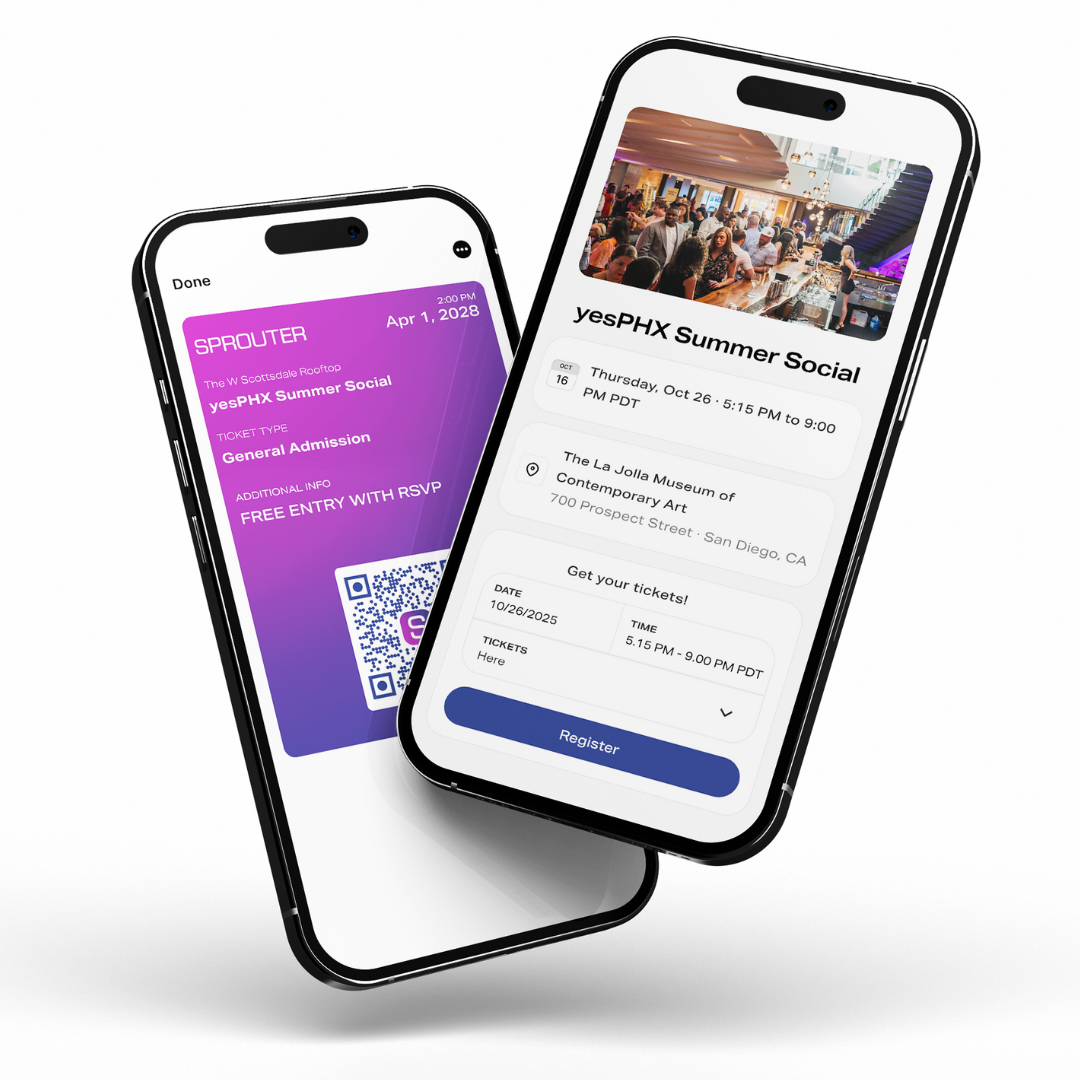
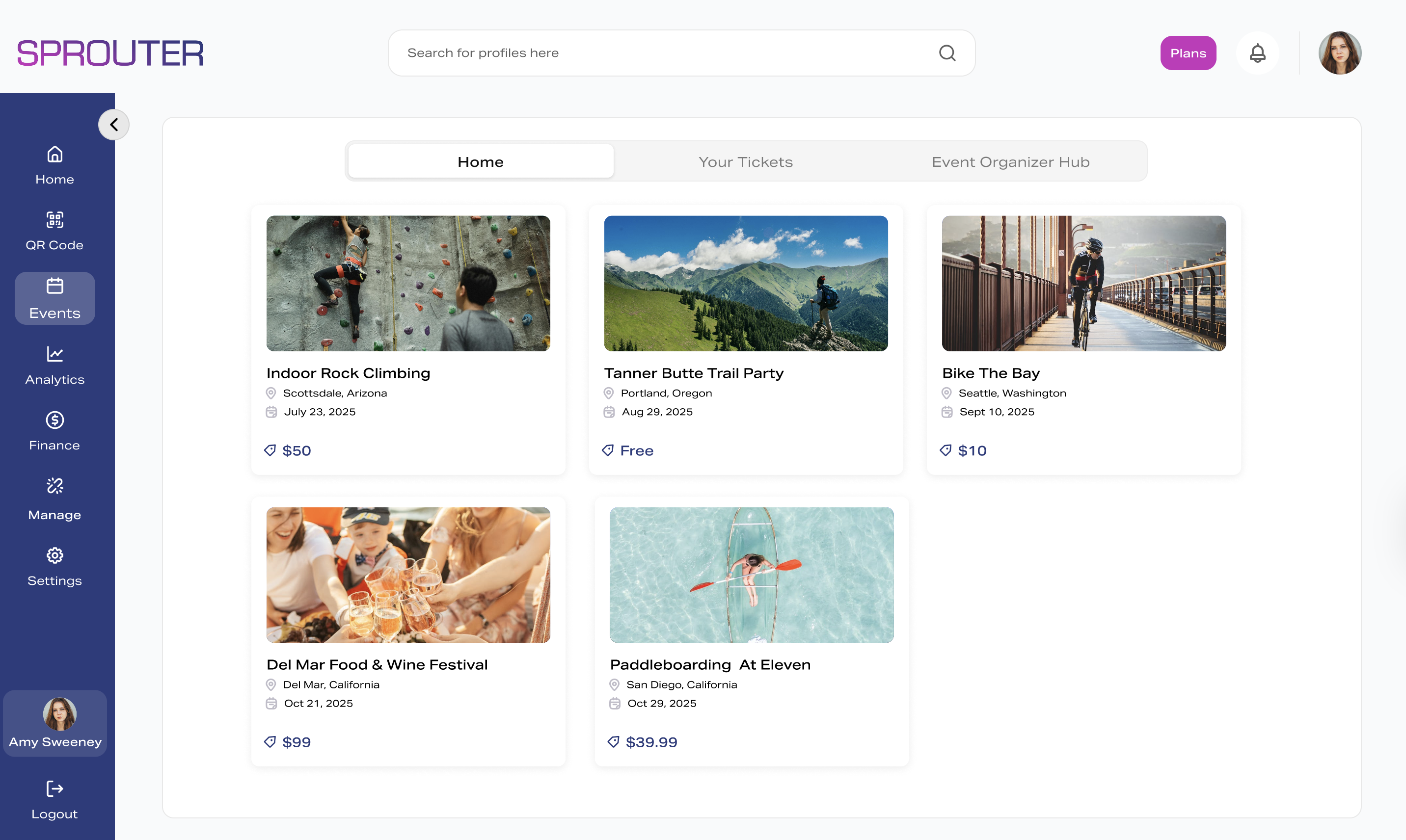
Sprouter exemplifies this approach by combining event ticketing with Action Pages, Dynamic QR Codes, integrated checkout, organizer ACH payout status, and analytics. Organizers create a connected system where promotional QR codes drive traffic to branded event pages and transaction records connect to the post-event payout workflow.
This integration eliminates the friction of managing separate tools for promotion, ticketing, and payments—friction that costs time and often leads to lost revenue from disjointed experiences.
Making the Decision: A Framework
Choose Free/Budget Platforms When:
- You’re hosting infrequent events (less than monthly)
- Ticket prices are under $20
- You have minimal branding requirements
- Basic RSVP tracking meets your needs
- You’re comfortable with longer payout timelines
Choose Premium Platforms When:
- Events represent significant revenue streams
- Brand consistency matters for your business
- You need real-time sales data to optimize marketing
- Complex pricing structures or reserved seating apply
- Clear payout status matters for cash-flow planning
Choose Integrated Platforms When:
- You run events as part of a broader engagement strategy
- Marketing, ticketing, and payments should connect seamlessly
- Analytics across the full customer journey inform decisions
- You want to reduce tool sprawl and simplify operations
The Platform Isn’t Everything
Even the best ticketing platform won’t save a poorly promoted event. Focus energy on:
- Clear event value propositions that answer “why should I attend?”
- Compelling event pages with professional imagery and persuasive copy
- Strategic pricing that balances accessibility with perceived value
- Promotional campaigns that reach your target audience where they already are
- Seamless experiences from discovery through check-in
The ticketing platform should enable these fundamentals, not compensate for weaknesses in them.
Getting Started
If you’re currently using a platform that takes more than 10% of revenue in fees, it’s worth exploring alternatives. If you’re cobbling together separate tools for promotion, ticketing, and payments, consider integrated solutions that reduce complexity.
Sprouter combines ticket sales with Action Pages for event promotion, Dynamic QR Codes for marketing, integrated checkout, and organizer ACH payouts. The platform fee structure and current payment-processing charges should be reviewed in the pricing page, Fee Schedule, and organizer agreement before selling tickets.
The right platform for your events depends on your specific situation. But the wrong platform definitely costs you money, time, or both. Invest the effort to compare options against your actual needs, and don’t let “free” pricing distract from total cost of ownership.
Ready to sell tickets with lower fees and integrated tools? Explore Sprouter’s event ticketing to see how Action Pages, QR codes, and embedded payments create seamless event experiences.