You spend years perfecting your craft. The vineyard decisions. The barrel selection. The blending trials. The countless details that make your wine, spirit, or craft beverage exceptional.
Then it sits on a shelf with a label that can fit maybe 50 words.
How does a consumer understand what makes your product special? How do they know the story behind the vintage, the philosophy of the winemaker, the centuries of tradition or bold innovation that shaped what’s in the bottle?
They don’t. Unless you give them a way to discover it.
Connected packaging—QR codes on bottles that link to rich digital experiences—transforms how beverage brands tell stories, build relationships, and create the context that justifies premium pricing.
This guide shows wine, spirits, and craft beverage producers how to turn every bottle into a direct connection with consumers who actually want to know your story.
The Premium Beverage Paradox
Premium beverage brands face a unique challenge: the more craft and care you put into your product, the harder it becomes to communicate on a bottle.
Consider what consumers might want to know:
Origin Story: Where exactly did grapes/ingredients come from? What makes that terroir/region special? Who are the farmers and producers involved?
Production Details: How was this specific vintage/batch created? What made winemaker/distiller decisions unique? How long aged? In what barrels?
Tasting Information: Detailed tasting notes beyond back label, food pairing recommendations, optimal serving temperature and glassware, aging potential.
Brand Context: History of the producer, family or team behind the brand, awards and recognition, philosophy and values.
None of this fits on a physical label. You’re limited to a few sentences that every competitor also uses.
QR codes unlock unlimited space. Every bottle becomes a portal to the full story your product deserves.
What Connected Bottles Enable
Storytelling That Creates Connection
The story behind the wine often matters as much as what’s in the glass—especially for premium products where emotional connection drives purchase and loyalty.
Vineyard Stories: Link to photos and videos of the actual vineyard. Show the view from the vines. Introduce the viticulturist.
Harvest Documentation: Share the story of this vintage. Was it a challenging year? An exceptional one? Consumers love the drama of agricultural uncertainty.
Winemaker/Distiller Voice: Let the creator speak directly. Video tasting notes. Written philosophy. Personality builds loyalty.
Historical Context: For heritage brands, share the history. Old photos, founding stories, generational transitions.
Tasting Education That Enhances Experience
The typical consumer doesn’t know how to get the most from your product. Education enhances their experience—and your brand value.
Detailed Tasting Notes: Go beyond back-label basics. Layer-by-layer description. How the wine evolves over hours.
Serving Guidance: Optimal temperature (specific, not just “room temp”), decanting recommendations, glass selection.
Pairing Recommendations: Not just “pairs with beef.” Specific dishes. Why the pairing works. Recipes included.
Comparison Context: How does this relate to others in your portfolio? How does this vintage compare to previous?
Direct Consumer Relationships
Most beverage sales happen through distributors and retailers who own the customer relationship. You ship product and hope for the best.
Connected packaging changes this:
Email Capture: Offer ongoing value (release notifications, exclusive offers) in exchange for direct contact.
Loyalty Programs: Reward repeated purchase with tier benefits, exclusive access.
Club Enrollment: Wine and spirits clubs are high-value relationships. Make enrollment frictionless from bottle scan.
Event Invitations: Tastings, harvest events, winemaker dinners—reach customers directly.
Feedback Collection: Understand what customers think without relying on retail reports.
Authenticity and Traceability
Counterfeiting is a serious problem in premium beverages. Estimates suggest up to 20% of premium wine bottles in some markets are fake.
Connected packaging provides verification:
Serial Authentication: Each bottle gets a unique code linking to production records. Consumers verify authenticity with a scan.
Supply Chain Transparency: Trace the journey from vineyard to glass.
Tamper Evidence: Codes placed under capsules detect if bottles have been opened and resealed.
For high-value bottles especially, authentication creates purchase confidence and protects brand reputation.
Implementation: From Concept to Bottle
Content Strategy for Beverages
Tier Your Content: Not every product needs the same depth.
Premium/Limited Releases: Full storytelling treatment—dedicated landing page per vintage, video content from winemaker, detailed tasting notes, production documentation.
Core Portfolio: Solid engagement—brand story, product-specific tasting notes, standard pairings.
Entry Level: Essential engagement—basic brand information, product category education, path to discovery of premium products.
Dynamic vs. Static Codes
For beverages, dynamic codes are essential:
Content Updates: Add new reviews, awards, and press as they happen.
Seasonal Relevance: Change pairing recommendations for holidays.
Inventory Management: Different destination for aged-out products.
Campaign Integration: Connect bottles to current marketing.
A wine bottled in 2024 might be opened in 2034. Static URLs may not even exist by then. Dynamic codes redirect to wherever makes sense when the bottle is finally opened.
Mobile Experience Design
Speed is Critical: Wine enthusiasm happens in the moment. Someone opens a bottle, wants to know more, scans. If loading takes forever, they lose interest.
Don’t Require Apps: Browsers handle QR codes natively now.
Respect the Context: Someone scanned from a dinner party. Don’t hit them with a 20-field form.
Multi-Action Capability: Offer choices—read tasting notes, watch winemaker video, join the club, find nearby retailers, get food pairing recipes.
Sprouter’s Action Pages are designed for exactly this—multiple paths from a single scan, optimized for mobile moments.
Use Cases Across Beverage Categories
Wineries
At the Tasting Room: QR codes at tasting stations link to detailed notes, purchase options, club enrollment, event calendar.
On Bottles: Every bottle shipped connects to vintage-specific content, aging tracker, reorder invitation.
Craft Distilleries
Spirit Storytelling: Grain sourcing, mash bills, still selection, barrel program, master distiller perspective.
Cocktail Recipes: Link to classic cocktails, original recipes, video tutorials, ingredient shopping lists.
Craft Breweries
Beer Style Education: Style history, how this beer exemplifies the style, food pairing for the style.
Freshness and Seasonality: “Best by” education, optimal drinking window, current batch information.
Taproom Connection: Current tap list, upcoming releases, events and tours.
Tasting Events and Experiences
Beverage brands often host events. Connected technology enhances them:
Pre-Event
Registration via QR: Promotional materials with codes that enable event information, ticket purchase, add-to-calendar function.
During Events
Tasting Stations: Each station has QR code linking to detailed notes, winemaker video, purchase option, rating submission.
Self-Guided Options: QR-enabled tasting allows moving at your own pace, accessing information when ready.
Post-Event
Purchase Enablement: “Scan to buy what you tasted” with direct links and event-specific offers.
Relationship Continuation: Email capture, club invitation, future event notifications.
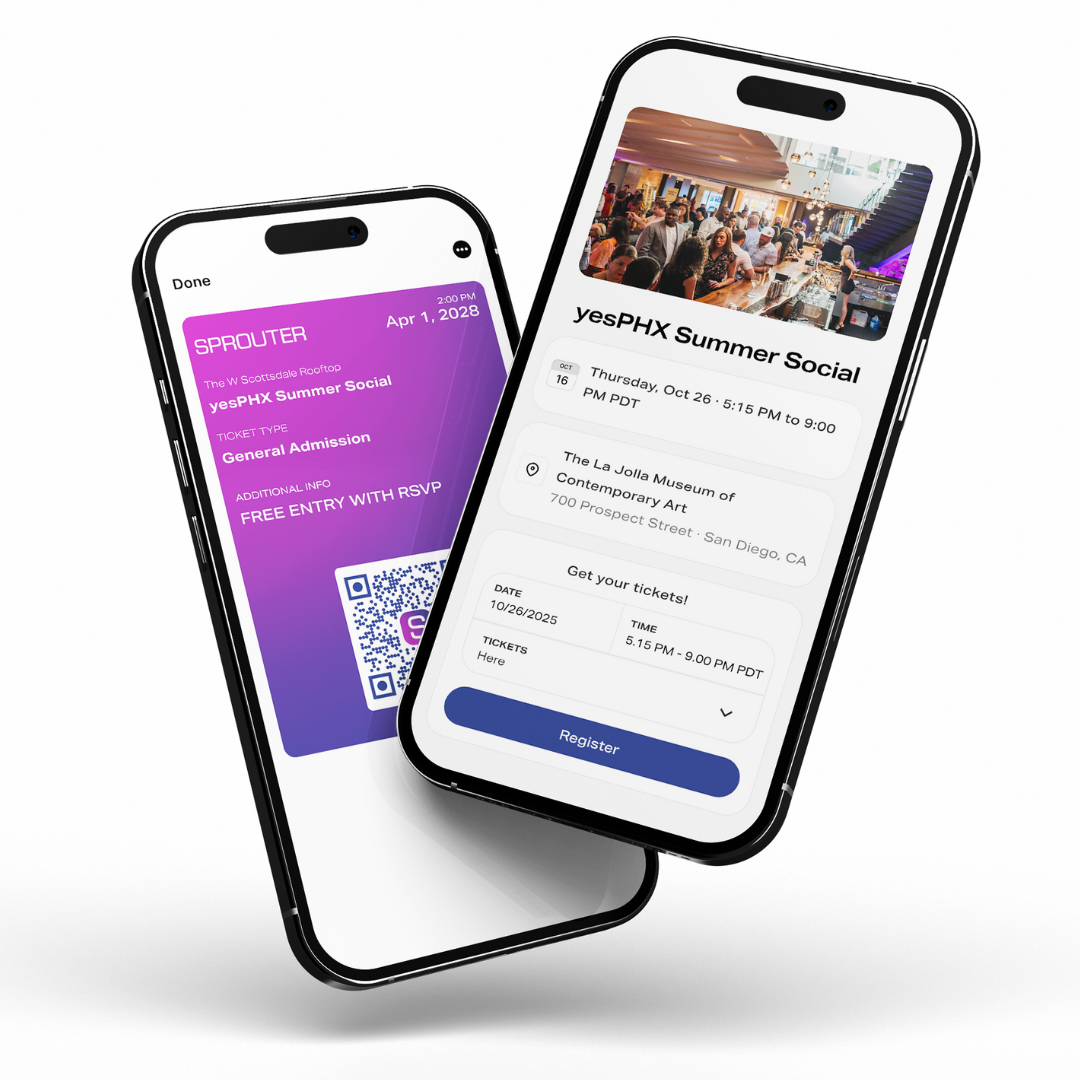
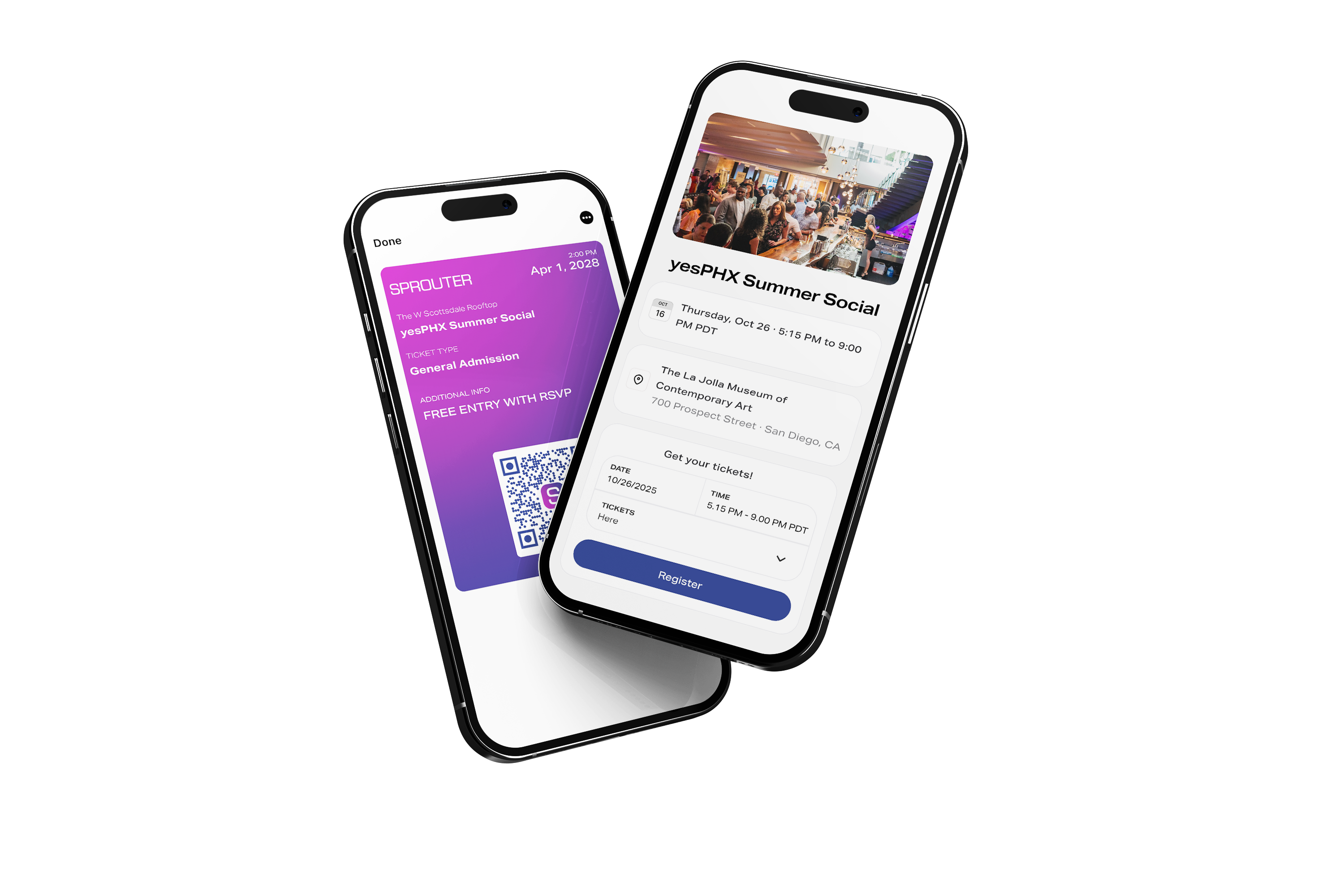
Sprouter’s event management handles the complete flow—from registration through check-in to post-event follow-up.
Data and Analytics for Beverage Brands
Connected packaging generates insight:
Consumer Behavior
Geographic Distribution: Where are bottles being scanned? Does it match where they’re shipped?
Timing Patterns: When do people scan? Purchase moment? Consumption moment?
Content Engagement: What resonates? Tasting notes? Videos? Pairing guides?
Product Performance
Engagement by SKU: Which products generate most engagement?
Vintage Comparison: Do certain years engage differently?
Market Intelligence
Regional Interest: Where is demand emerging before sales data shows it?
Consumer Segments: What types of consumers engage most?
The Sprouter Advantage for Beverage Brands
Sprouter provides complete connected packaging infrastructure:
Dynamic QR Codes: Update bottle destinations without label changes. Manage thousands of SKUs from one dashboard. Track every scan with full context.
Action Pages: Mobile-native landing experiences built for consumer moments. Fast loading, beautiful design, multiple engagement paths.
Storytelling Capability: Rich content delivery—video, images, text, embedded media—that tells your story properly.
Email and Social Capture: Built-in relationship capture. Connect directly with consumers who want to hear from you.
Event Integration: For tastings and experiences, Sprouter handles ticketing, registration, check-in, and follow-up in the same platform.
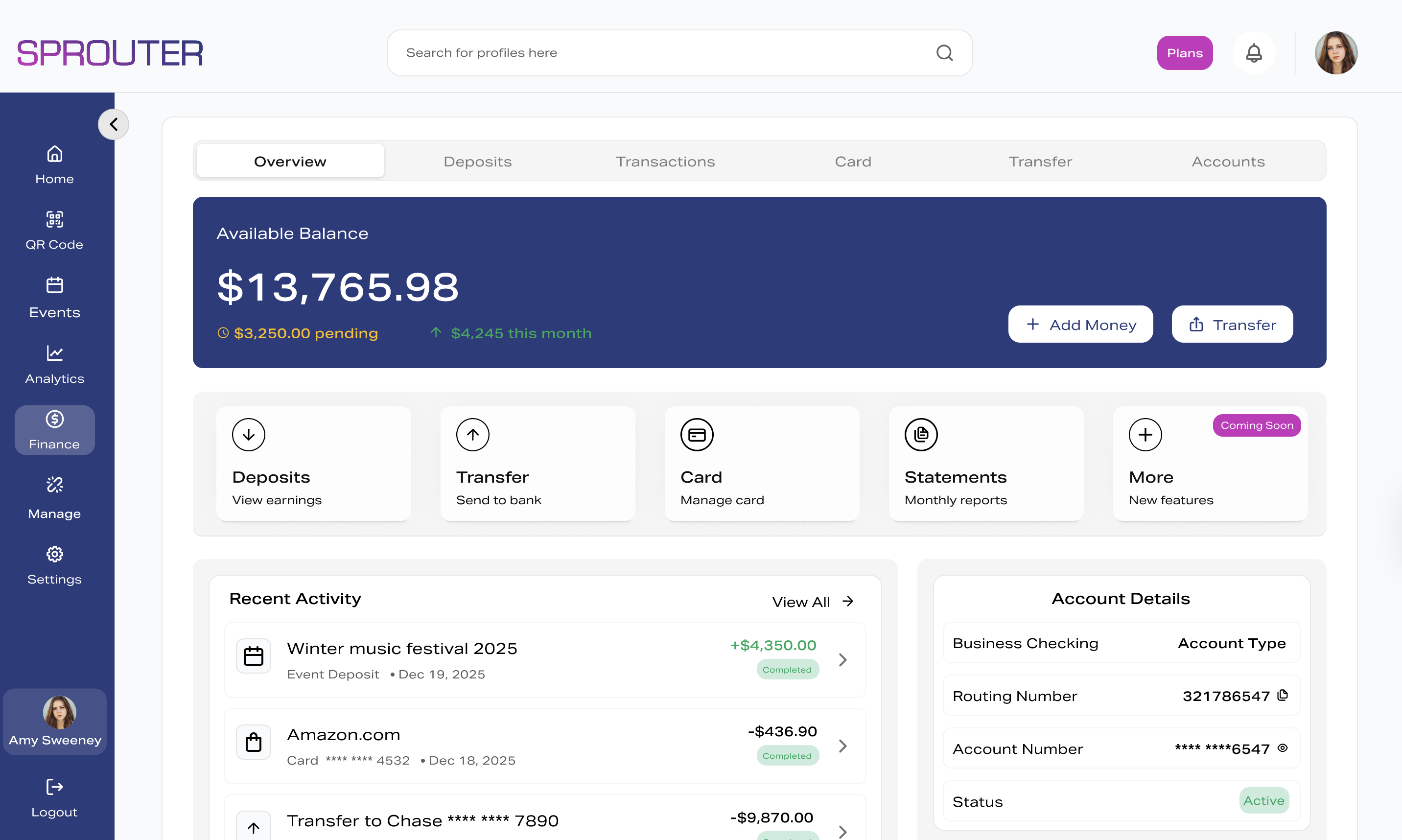
Commerce Capability: Direct-to-consumer sales, club enrollment, and payment processing through integrated infrastructure.
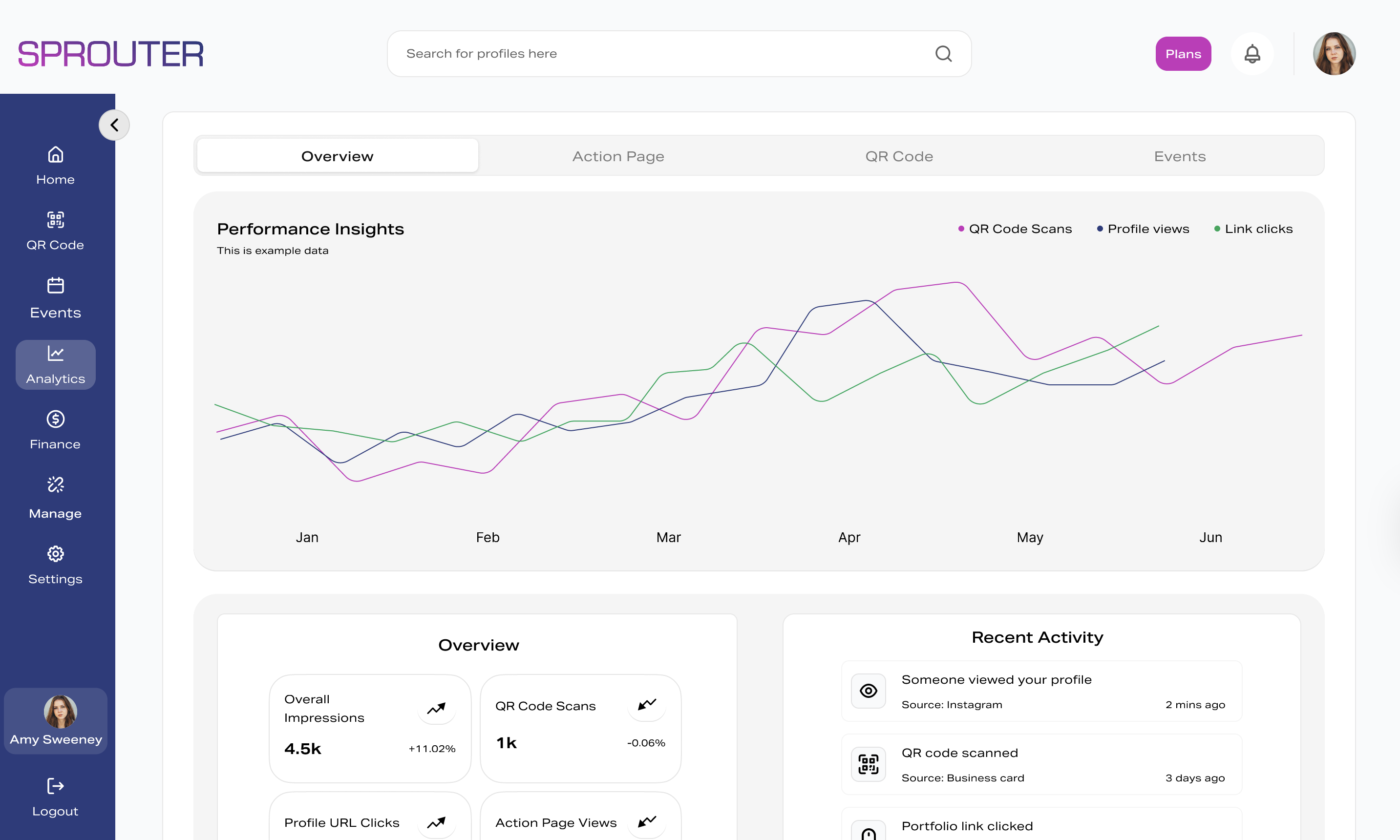
Unified Analytics: See which products engage, which content performs, which consumers convert—all connected.
Ready to turn every bottle into a direct consumer connection? Sprouter provides the complete platform wine, spirits, and craft beverage brands need—dynamic QR management, Action Pages, event capabilities, and commerce infrastructure. Tell your story the way it deserves to be told.