Local venues face a persistent challenge: connecting with potential customers in an increasingly fragmented attention landscape. Between social media algorithms that limit organic reach, expensive advertising with uncertain returns, and the operational complexity of managing multiple tools, filling seats consistently requires strategic thinking and efficient execution.
Three types of local venues have found particularly effective applications for Sprouter’s integrated approach: music venues and event spaces, restaurants and bars, and community gathering places. Their experiences illustrate patterns any local business can adapt.
The Music Venue Challenge
Small and mid-sized music venues operate in a demanding environment. They need to promote shows effectively, sell tickets efficiently, manage door operations smoothly, and track revenue accurately—often with minimal staff and tight margins.
The Scattered Tool Problem
Before adopting integrated platforms, venue operators typically manage:
- Social media accounts for promotion (often 3-5 platforms)
- A ticketing platform separate from their website
- Payment processing through yet another service
- Door management with manual lists or disconnected apps
- Analytics scattered across multiple dashboards
Each tool works adequately in isolation, but the lack of integration creates friction, increases labor, and obscures the full picture of what’s working.
The Integrated Approach
Venues using Sprouter consolidate these functions into a connected system:
Promotion through Action Pages: Rather than sending potential attendees to multiple destinations, venues create a single Action Page serving as their digital hub. Upcoming shows, ticket links, venue information, and contact details all live in one mobile-optimized location.
QR codes bridging offline and online: Posters, flyers, table tents, and signage throughout the venue drive traffic to the Action Page through scannable QR codes. Dynamic codes let venues update destinations without reprinting materials—critical when show lineups change or promotions evolve.
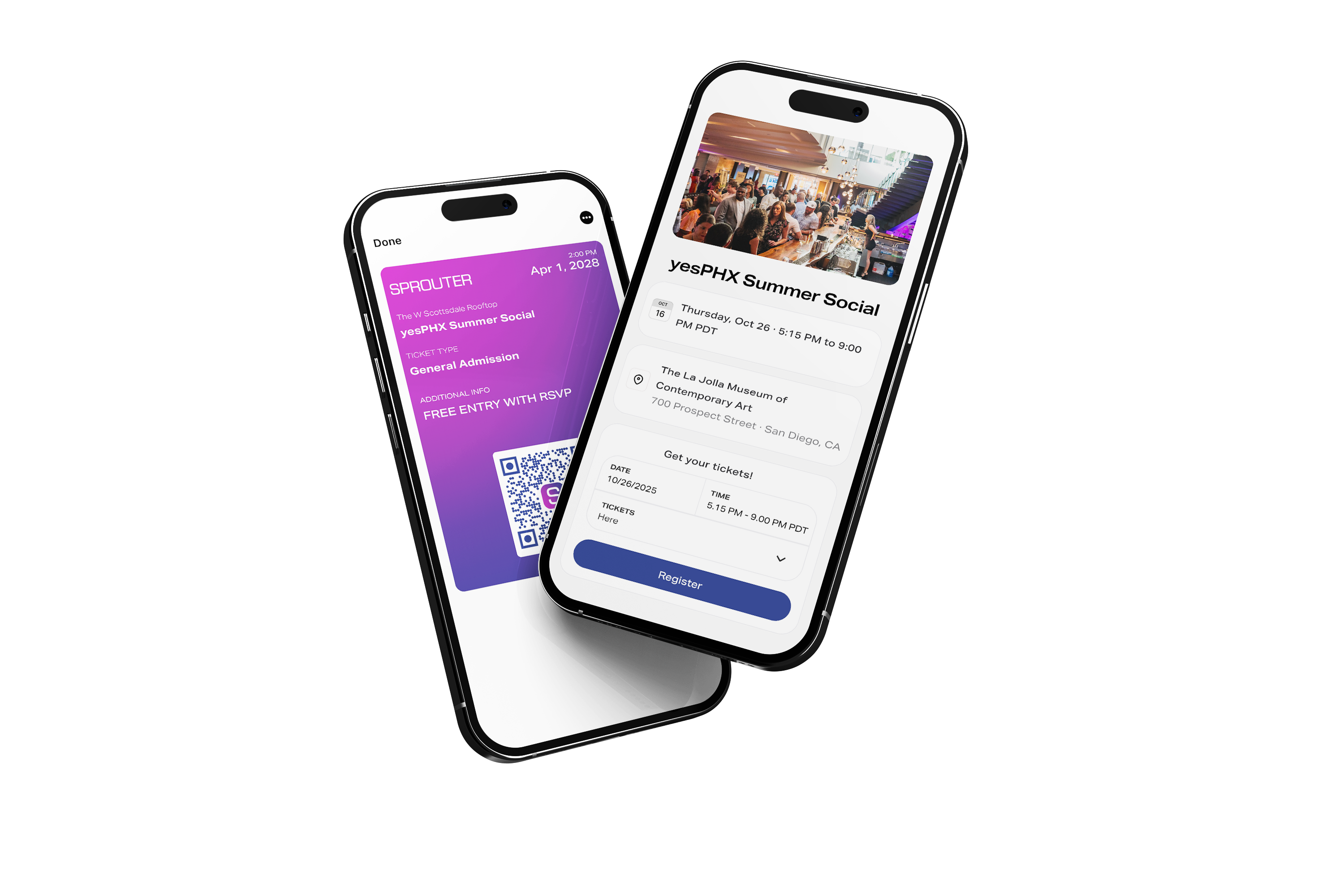
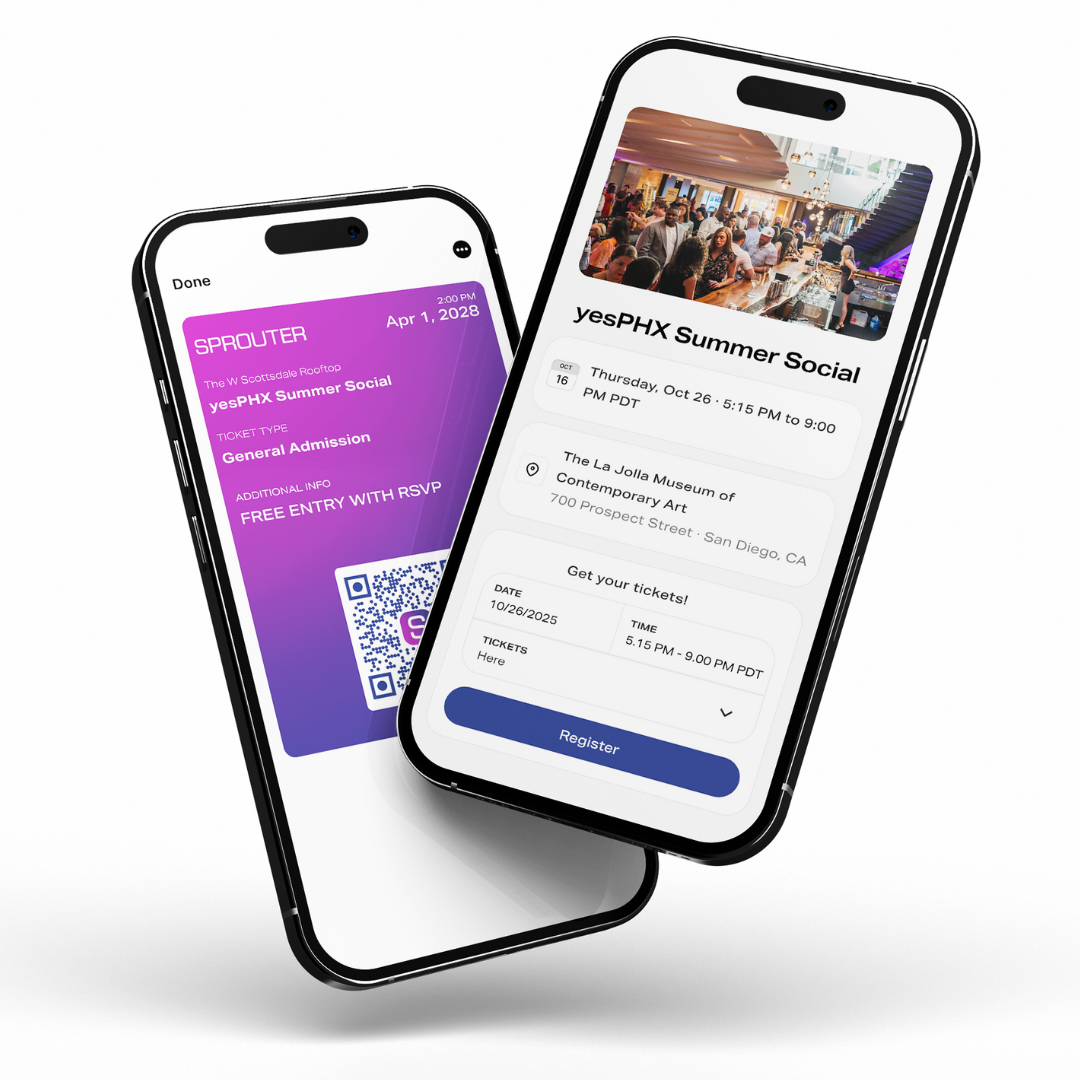
Ticketing with transparent fees: Sprouter’s event ticketing lets venues sell directly to attendees with predictable fee structures. Pro+ tier organizers keep more revenue compared to major ticketing platforms, and the integrated check-in tools eliminate the need for separate door management apps.
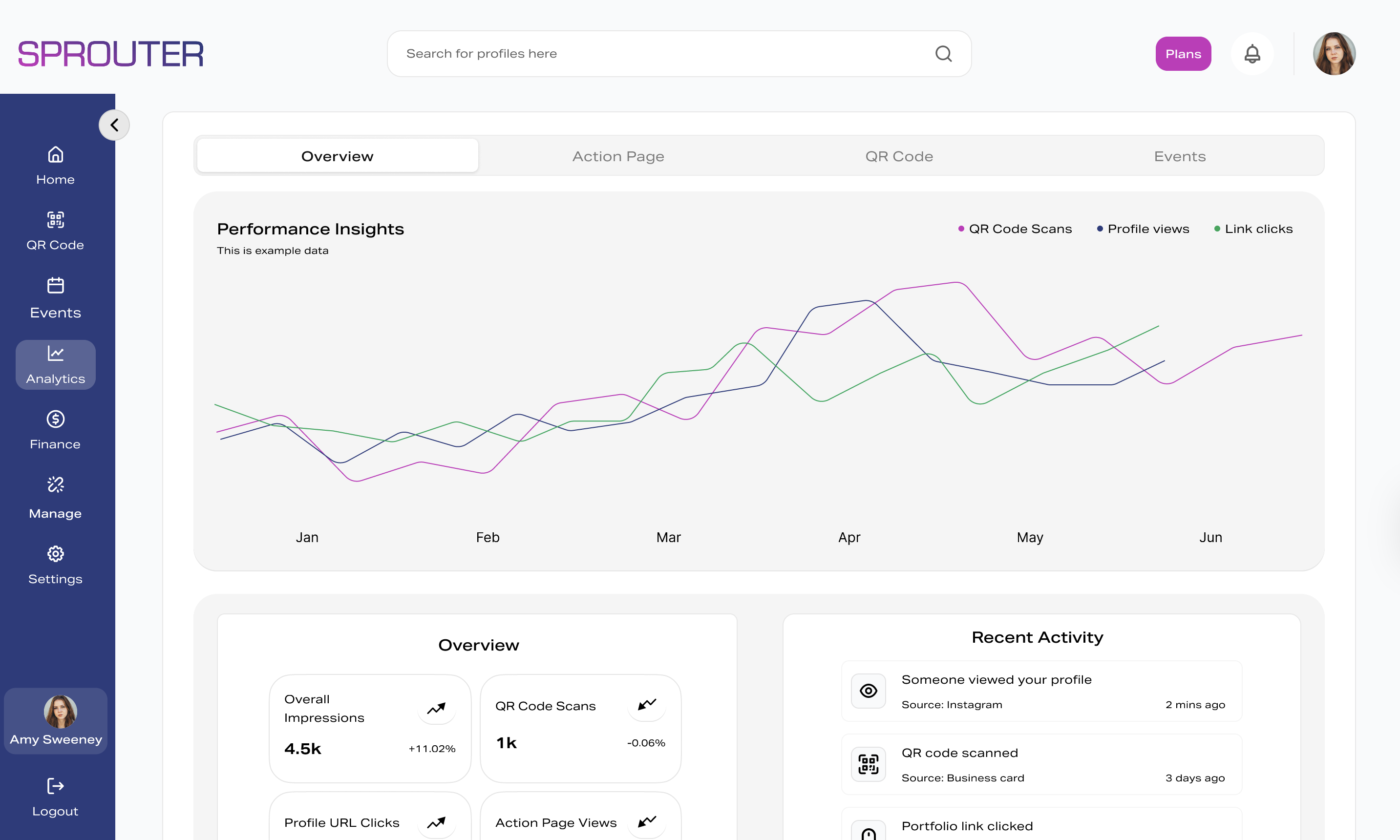
Analytics revealing what works: When promotion, ticketing, and check-in all flow through one platform, venues can trace the customer journey from initial QR scan to ticket purchase to actual attendance. This visibility informs future promotional strategy.
Results That Matter
A 200-capacity venue running 15 shows monthly might see:
- Reduced tool costs: Consolidating 4-5 separate subscriptions into one platform
- Time savings: Staff spending less time reconciling data across systems
- Higher ticket retention: Lower fees mean more revenue per ticket sold
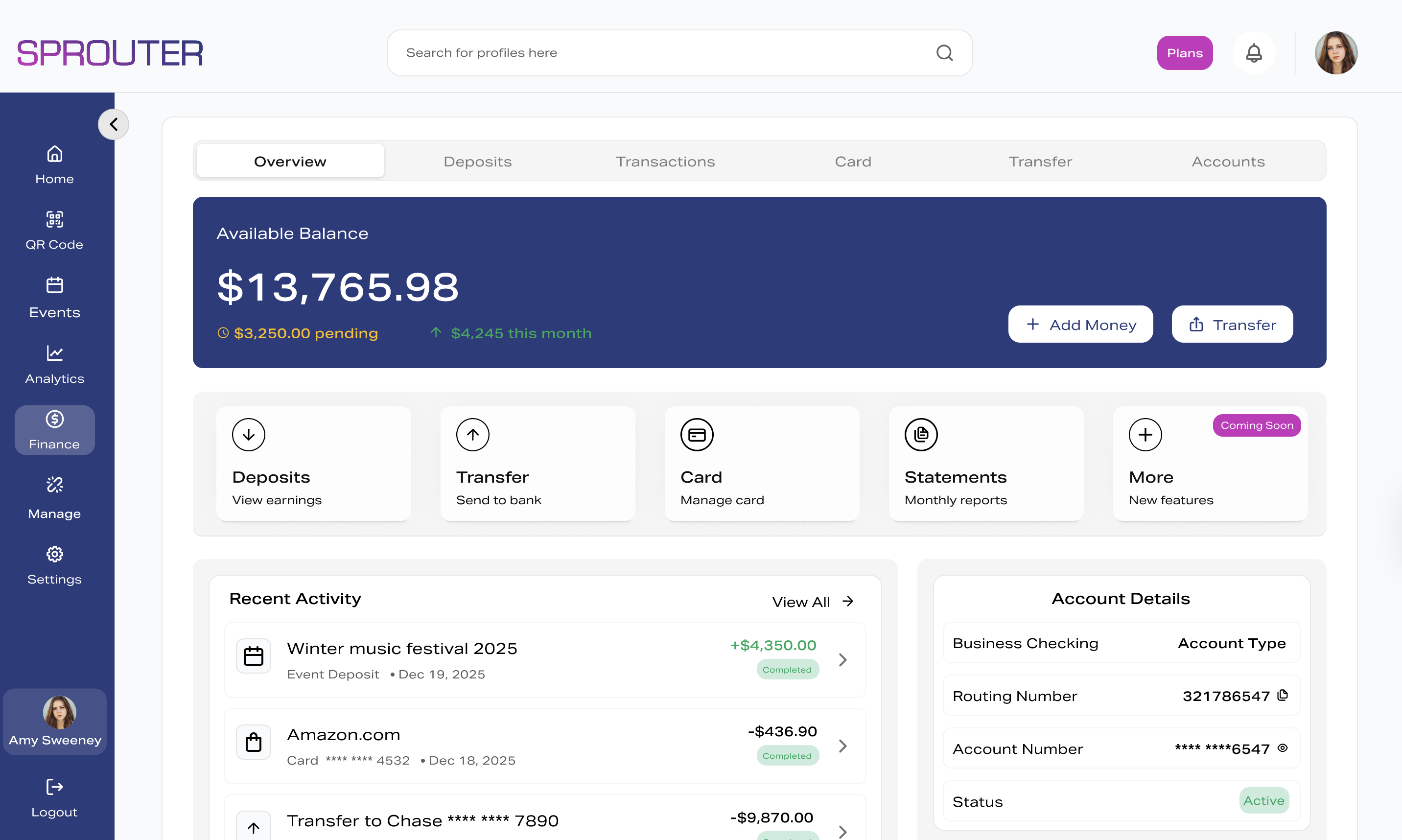
- Clear payout workflow: Post-event review and organizer ACH payout status stay connected to event records
- Better decisions: Connected analytics showing which promotional channels drive actual ticket sales
The compound effect—saving money, saving time, and making better decisions—accumulates across dozens of events annually.
The Restaurant and Bar Opportunity
Restaurants have embraced QR codes since the pandemic made contactless menus mainstream. The hospitality use case is one of the strongest for integrated O2O platforms. But many stopped at basic PDF menus, missing the broader opportunity QR technology enables.
Beyond the Digital Menu
Smart restaurants use QR codes and Action Pages for:
Multi-purpose hubs: A single QR code on every table can direct to an Action Page containing the menu, reservation booking, loyalty program signup, social media links, event calendar, and special offers. Update any element without changing the code.
Event promotion: Many restaurants host live music, trivia nights, wine dinners, or special events. Integrating event ticketing into their existing digital presence—rather than pointing customers to external ticketing platforms—keeps the experience branded and captures more attendee data.
Reservation and waitlist management: Embedding booking widgets directly on Action Pages reduces friction compared to directing customers to separate reservation platforms.
Feedback capture: Post-meal QR codes can direct to review platforms, feedback forms, or loyalty signups—capturing engagement while the experience is fresh.
The Power of Scheduled Content
Restaurant promotions change constantly: happy hour specials, seasonal menus, holiday events, limited-time offers. The ability to schedule link visibility means promotional content appears automatically during relevant windows without staff intervention.
A restaurant might configure:
- Happy hour specials visible only Tuesday-Friday, 4-7 PM
- Weekend brunch menu appearing Saturday-Sunday mornings
- Event tickets appearing when shows are announced, disappearing when sold out
- Seasonal menu links active only during promotional periods
This dynamic content management keeps Action Pages current without constant manual updates.
Measurable Impact
Restaurants implementing this approach report:
- Increased event attendance through integrated promotion and ticketing
- Higher email capture rates from embedded signup forms
- Better promotional ROI through analytics showing which offers drive engagement
- Reduced operational complexity from consolidating tools
The Community Space Model
Community centers, coworking spaces, galleries, and cultural institutions share a common challenge: promoting diverse programming to varied audiences while managing tight budgets.
Programming Diversity Creates Complexity
A typical community space might host:
- Weekly workshops and classes (some free, some paid)
- Monthly exhibitions or performances
- Rental events from external organizers
- Ongoing memberships and recurring programs
- Special fundraising events
Managing this programming mix across separate ticketing platforms, social accounts, and promotional channels quickly becomes overwhelming.
The Centralized Hub Solution
Action Pages serve as the central digital destination for all programming:
Organized link structure: Categories separate ongoing programs from special events, memberships from one-time workshops. Visitors find what they’re looking for without navigating cluttered interfaces.
Consistent branding: Whether someone arrives for a free workshop or a ticketed fundraiser, they experience consistent visual identity that reinforces organizational brand.
Flexible ticketing: Events can range from free RSVPs to multi-tier paid tickets, all managed through the same platform.
Donor and member communication: Beyond events, Action Pages can house donation links, membership information, and newsletter signups—consolidating supporter engagement in one place.
Nonprofit-Specific Benefits
Community organizations often qualify for discounted or special pricing from ticketing platforms. But the real savings come from reduced administrative overhead. Staff time previously spent managing multiple tools can redirect toward mission-focused work.
For organizations where every dollar matters, the combination of lower fees, consolidated management, and better donor/member tracking creates meaningful operational improvement.
Patterns Across Venue Types
Despite different contexts, successful venue implementations share common patterns:
Start with the Customer Journey
Rather than thinking about tools, think about how customers discover, engage with, and transact with your venue. Map that journey, identify friction points, then implement technology that smooths the path.
Consolidate Before You Expand
Adding new promotional channels or tools increases complexity. Before expanding, ask whether existing tools are fully utilized. Often the answer is no—and optimization beats addition.
Measure What Matters
Vanity metrics (page views, followers, likes) feel good but rarely drive business outcomes. Focus on conversion metrics: scans that become ticket purchases, visitors that become email subscribers, one-time attendees that become regulars.
Test and Iterate
The first version of your Action Page or QR strategy won’t be optimal. Build measurement into your approach from the start, review data regularly, and adjust based on what you learn.
Staff Training Matters
Technology only works if people use it correctly. Invest time in training staff on new systems, explaining not just how tools work but why the approach matters.
Implementation Framework
For venues considering this integrated approach:
Phase 1: Foundation (Week 1-2)
- Create Action Page with essential venue information
- Set up basic link structure for existing assets (social profiles, website, existing ticketing)
- Generate initial QR codes for primary placement locations
- Establish baseline metrics for current performance
Phase 2: Integration (Week 3-4)
- Migrate ticketing to integrated platform for upcoming events
- Update printed materials with new QR codes
- Train staff on check-in tools and operational workflows
- Begin tracking scan-to-ticket conversion metrics
Phase 3: Optimization (Ongoing)
- Review analytics weekly to identify patterns
- Test different link arrangements and CTA copy
- Expand QR placement based on scan performance data
- Iterate Action Page content based on engagement patterns
Phase 4: Expansion (As Capacity Allows)
- Add media embeds, files, and advanced features
- Implement time-based visibility for promotions
- Review event-payment onboarding and organizer ACH payout terms
- Consider custom domains and white-label options
The Technology Is the Easy Part
Tools like Sprouter make the technical implementation straightforward. The harder work is strategic: understanding your customers’ journey, designing experiences that serve them, and maintaining the discipline to measure, learn, and improve.
The venues filling seats consistently in 2026 aren’t necessarily those with the biggest marketing budgets or the most sophisticated technology. They’re the ones who’ve thought carefully about how offline presence connects to online engagement, who’ve eliminated friction from the customer journey, and who make decisions based on data rather than assumptions.
Sprouter provides the infrastructure—Action Pages, dynamic QR codes, event ticketing, analytics, and embedded payments—but the strategic thinking that makes these tools effective comes from venue operators who understand their audiences and care about their experiences.
Ready to see how Sprouter can work for your venue? See our pricing or create your free Action Page and start connecting offline presence to online engagement today.